- Successful Quran memorization relies on the classical 3-tier structure: Sabaq (new lesson), Sabqi (recent revision), and Manzil (distant revision).
- Revision is ten times more important than memorizing new verses; neglecting old memorization leads to heartbreaking memory decay.
- Always memorize using a single, identical physical Mushaf edition to build photographic visual memory of page layouts.
- The prime time for Hifz memorization is directly after Fajr prayer when the mind is fully rested and free from daily cognitive clutter.
Memorizing the Holy Quran (Hifz al-Quran) is one of the highest spiritual honors in Islam. The child who commits the divine revelation to memory carries an eternal light in their heart, gains immense intellectual discipline, and earns the greatest crowns of honor for their parents on the Day of Resurrection.
The Prophet Muhammad (peace be upon him) said: > "Whoever recites the Quran, learns it, and acts upon it, his parents will be crowned on the Day of Resurrection with a crown of light whose radiance is like the light of the sun." (Al-Hakim in Al-Mustadrak 1/756)
Yet, memorizing over 6,000 verses is a massive psychological and cognitive endeavor. Without a structured methodology, young students frequently hit severe roadblocks: overwhelming frustration, mixing up similar verses (Mutashabihat), and the heartbreaking heartbreak of forgetting previously memorized Surahs.
How do traditional Islamic seminaries produce thousands of young Huffaz who can recite entire Juz effortlessly from memory? They rely on the classical 3-part Hifz architecture.
To help a child memorize the Quran successfully, implement the classical 3-part Hifz system: Sabaq (new daily memorization), Sabqi (revision of the last 20–30 pages), and Manzil (continuous cycling of older Juz). Memorize using one consistent Mushaf edition, schedule study directly after Fajr, and prioritize revision over memorizing new verses.
The Tripartite Hifz Engine: Sabaq, Sabqi, and Manzil
Keep new memorization, recent revision and older revision in the plan. There is no single percentage that fits every learner. If older recall becomes weak, reduce new material and review the workload with the tutor.
Traditional institutions organize daily study into three distinct compartments:
---
1. Sabaq: Mastering the New Daily Lesson
The student's new daily assignment should be calibrated to their capacity: typically 3 to 5 lines for beginners, progressing to a half-page or full page for experienced students.
The 5-Step Memorization Protocol: 1. Flawless Reading First: Read the new page 5 times directly from the Mushaf to an Ijazah-certified teacher to ensure zero pronunciation mistakes. Never memorize a mistake! 2. Ayah-by-Ayah Chunking: Memorize verse 1 until you can recite it 5 times without looking. Then memorize verse 2. Connect verse 1 and 2 together 5 times. 3. Audio Imprint: Listen to an audio recording of the page by Sheikh Mahmoud Khalil Al-Husary 3 times while following the text with a finger. 4. Closing the Eyes: Test recall verse by verse. 5. Nighttime Consolidation: Recite the new Sabaq during Sunnah prayers before sleeping. Sleep consolidates neural memories in the brain's hippocampus.
Explore our dedicated Quran Memorization Course for individualized Hifz pacing.
2. Sabqi: Safeguarding the "Wet Cement"
Newly memorized verses are like wet cement; they take approximately 20 to 30 days of continuous exposure to harden into permanent long-term memory. - If a child memorizes Surah Al-Mulk on Monday, but does not revise it for two weeks, it will evaporate completely. - The Golden Rule: Every single day, the student must recite their recent memorization (the current Juz or last 15 pages) to their instructor before they are allowed to present their new Sabaq. - If the Sabqi is weak, the teacher must withhold new Sabaq for the day until the foundation is solid.
3. Manzil: The Permanent Fortress
Manzil is the continuous, lifetime review of all older, completed Juz: - A student who has memorized 5 Juz must cycle through 1/2 Juz of Manzil every day, completing a full revision cycle every 10 days. - A student who has memorized 15 Juz should revise 1 Juz daily. - Neglecting Manzil is why many students memorize the entire Quran only to discover they have forgotten the first half by the time they finish!
The Prophet Muhammad (peace be upon him) warned about this biological reality: > "Maintain the Quran, for by the One in Whose hand is my soul, it slips away more easily than camels from their bonds." (Sahih al-Bukhari 5033)
---
4 Critical Rules for Parents Supporting Hifz at Home
Rule 1: Use ONE Identical Mushaf Edition
The human brain memorizes text visually as well as auditorily. When a child reads, their visual cortex takes a snapshot of the page—remembering that a verse starts at the top-right corner and ends four lines down. - If you switch between different Quran copies (e.g., using a 13-line Pakistani script one day and a 15-line Madinah Mushaf the next), you destroy this visual mapping. - Purchase two identical copies of the standard 15-line Madinah Mushaf: one for home and one for travel.
Rule 2: Protect the Post-Fajr Golden Hour
The brain's cortisol and alertness hormones are at their peak shortly after waking. The house is silent, notifications have not started, and the mind is unburdened by school fatigue. - Dedicating 30 to 45 minutes immediately after Fajr prayer yields triple the retention of studying late in the evening.
Rule 3: Support Memory with Nutrition & Sleep
The brain requires proper biological fuel for intensive synaptic firing: - Ensure 8 to 9 hours of uninterrupted sleep every night. - Provide foods rich in Omega-3 fatty acids: raw walnuts, almonds, honey, and olive oil. - Eliminate sugary sodas, artificial food colorings, and excessive gaming before study sessions, which induce brain fog.
Rule 4: Celebrate Small Milestones Enthusiastically
Hifz is a multi-year marathon. Children cannot stay motivated by distant graduation ceremonies four years away. - Celebrate every milestone: completing a quarter Juz (Hizb), completing a full Juz, or mastering a difficult Surah like Surah Ya-Sin. - Host a family dinner, gift them a special toy, or invite loved ones to listen to their recitation.
Professional Hifz Mentorship at QuranHeaven
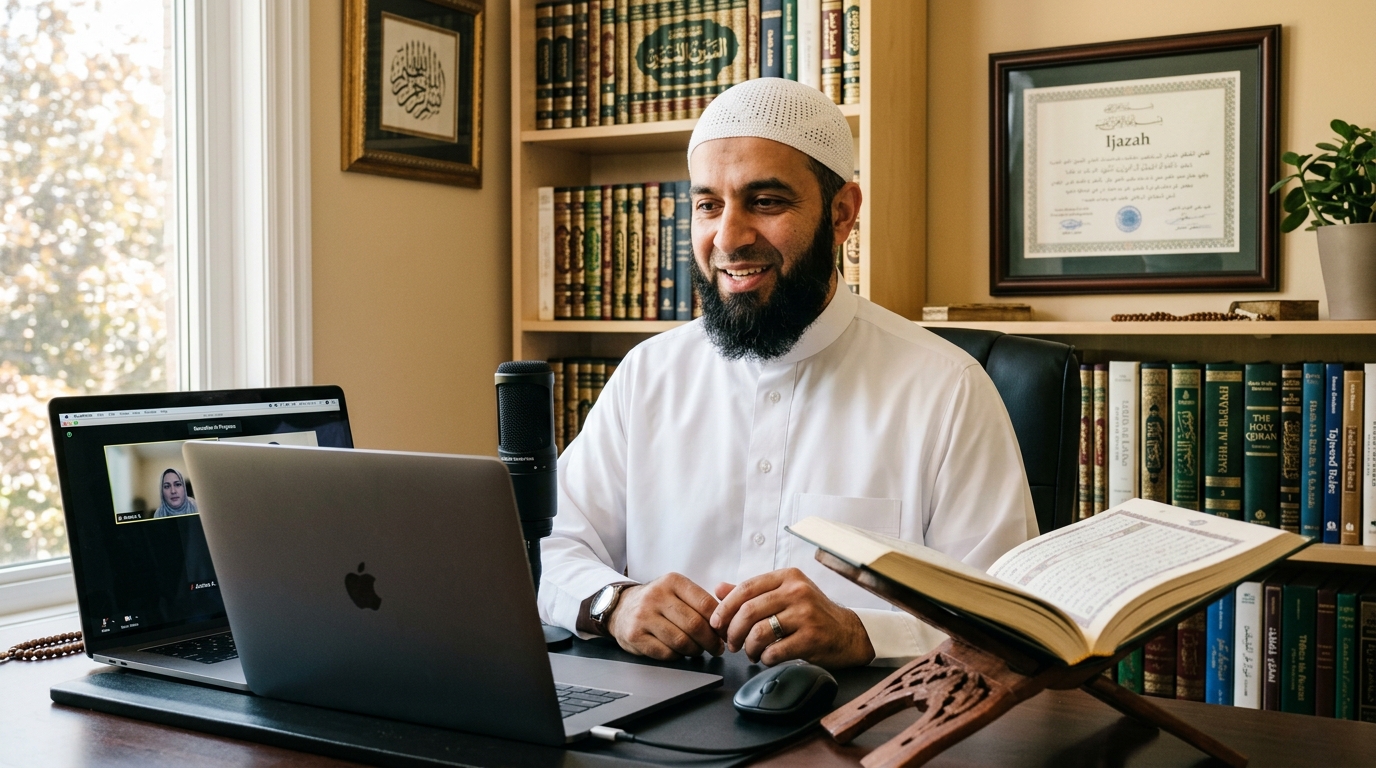
A suitable Hifz tutor can listen to recitation, identify recurring errors and help plan revision. Ask about the assigned tutor’s relevant experience and any advertised credential before enrolling.
Conclusion: An Eternal Crown Awaits
There is no endeavor in this worldly life more noble, rewarding, and transformative than guiding your child toward becoming a bearer of Allah's book (Hamil al-Quran).
The hours you invest today in listening to their recitation and encouraging their revision will become radiant light in your grave and a crown of glory on the Day of Resurrection.
Begin your child's memorization journey with certified scholars. Schedule your free Hifz evaluation class at QuranHeaven today.