πŸ“ž +1 (317) 751 5969 USA | πŸ’¬ WhatsApp | ✨ Free Trial Class
For Kids ✨ Updated September 4, 2026 ⏱ 6 min read

Online Quran Classes for Kids: A Complete Guide for Parents

UF
Reviewed by Ustazah Fatima Female Education Head
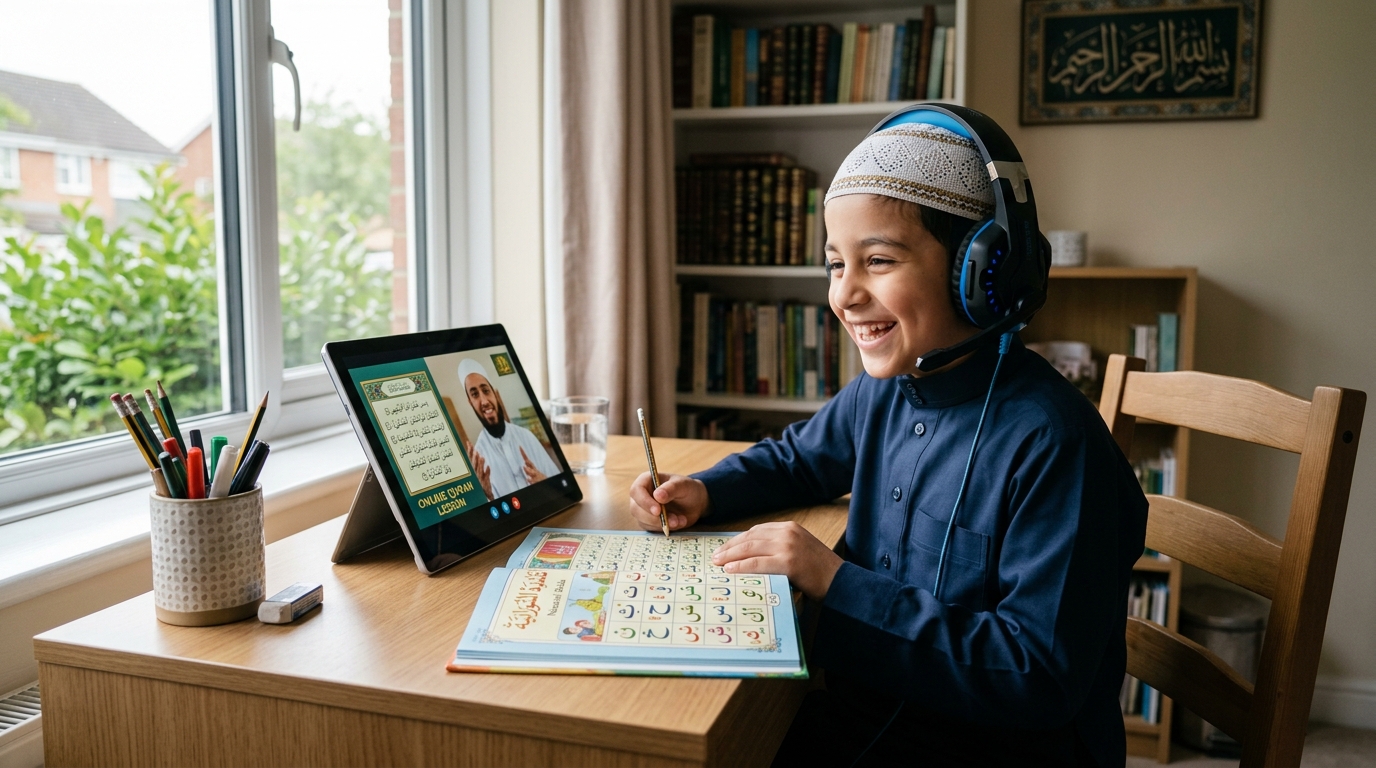
Young Muslim boy smiling while attending an interactive online Quran class with a certified teacher
πŸ’‘ Key Takeaways (TL;DR)
  • Online Quran classes for children must replace harsh lecturing with positive reinforcement, micro-sessions, and interactive gamification.
  • Children aged 4 to 6 thrive best with multisensory Noorani Qaida lessons combining visual letter cards, phonetic rhymes, and tracing.
  • One-on-one virtual lessons protect children from negative peer competition while allowing teachers to adapt to individual learning speeds.
  • Parental involvement should focus on encouraging consistency, providing a quiet space, and celebrating weekly milestones rather than pressuring perfection.

Raising righteous Muslim children in today's fast-paced, digital world is one of the most sacred and challenging responsibilities parents face. In Western countries and multicultural societies, finding an experienced, gentle, and child-friendly Quran teacher locally can be an immense hurdle. Many parents recall their own childhood madrasah experiencesβ€”marked by crowded classrooms, long commutes, and unfortunately, harsh teaching methods that created anxiety rather than love for the Quran.

Modern online Quran classes for kids solve these challenges. By connecting your child directly with compassionate, certified Islamic educators in a private 1-on-1 digital classroom, your child can develop a lifelong, loving relationship with Allah's words.

⚑ Quick Answer

Online Quran classes for kids provide customized 1-on-1 virtual instruction tailored to a child's developmental pace. Utilizing gamified Noorani Qaida lessons, digital flashcards, 25-minute focused sessions, and positive reinforcement, children learn Arabic letter pronunciation, foundational Tajweed, and daily prayer Surahs from home under full parental oversight.

Why Online Quran Learning Outperforms Traditional Methods for Kids

Children learn differently than adults. Their cognitive architecture requires active stimulation, visual clarity, frequent positive feedback, and emotional safety.

Here is why thousands of Muslim families are choosing virtual Quran schooling:

ConsiderationOnline Quran Classes at HomeTraditional Weekend Madrasah
Class EnvironmentPrivate 1-on-1 attention with zero distractionsGroup setting with 15–25 students per teacher
Teaching PhilosophyEncouraging, child-centered, positive reinforcementOften traditional, strict, rote memorization
Safety & TransparencyParents observe lessons in real time at homeClosed doors; parents drop off and wait outside
Class DurationFocused 25–30 minute high-engagement sessionsExhausting 2 to 4-hour weekend blocks
Pace AdaptabilityCustom pace matching child's unique learning curveFixed curriculum regardless of student retention
Teacher MatchingMatch with specialized male or female child tutorsLimited to whatever staff the local center employs

The Prophet Muhammad (peace be upon him) commanded gentleness in education: > "Teach and make things easy, and do not make them difficult. When any of you becomes angry, let him remain silent." (Musnad Ahmad 2136)

Our child-centric pedagogy reflects this exact Sunnah by replacing pressure with patient encouragement.

The Structured Learning Stages for Young Quran Students

To ensure consistent progress without overwhelming young learners, QuranHeaven structures children's Quran education into four progressive phases:

Phase 1: Letter Mastery & Auditory Noorani Qaida (Ages 4–6) Young children are auditory geniuses. During this phase, teachers focus on: - Multisensory recognition of the 28 Arabic letters using colorful animal associations and phonics. - Correct articulation of throat and tongue letters (Qaf, Khaa, Ayn, Haa) before bad pronunciation habits form. - Learning short everyday Duas (before eating, sleeping, waking) and basic Islamic manners (Adab). - Memorizing short chapters like Surah Al-Fatiha and Surah Al-Ikhlas through rhythmic call-and-response.

For early learners, check out our Learn Noorani Qaida Online curriculum.

Phase 2: Connecting Letters & Basic Reading (Ages 6–8) Once single letters are mastered, children learn how Arabic words connect: - Understanding initial, medial, and final letter shapes. - Mastering the three short vowel markers: Fatha (a), Kasra (i), and Damma (u). - Reading compound two-letter and three-letter words from the Qaida. - Introducing Tanween (double vowels) and Sukoon (stopping mark).

Phase 3: Juz Amma Recitation with Practical Tajweed (Ages 8–11) Moving from the Qaida directly into the Mushaf: - Reciting Surahs from Surah An-Nas to Surah Ad-Duha with smooth word connection. - Applying basic Tajweed rules naturally: Ghunnah (nasal hum), Qalqalah (echo bounce on bouncing letters), and Ikhfa (soft nasal concealment). - Understanding the basic storyline of each Surah to build emotional connection.

Explore our tailored Online Tajweed Course for kids ready to polish their recitation.

Phase 4: Fluency, Memorization (Hifz), & Islamic Character (Ages 9+) For kids who demonstrate advanced interest: - Reading longer Surahs from Juz 28 and 29. - Systematic memorization schedules tailored for young minds through our Quran Memorization Course. - Learning practical Islamic values: honesty, kindness to parents, cleanliness, and Salah movements.

6 Secrets to Keep Kids Motivated in Online Quran Classes

  1. Keep Lessons Short and Sweet: Never book 60-minute classes for kids under 10. A child's maximum focused attention span is roughly 3 to 5 minutes per year of age. 25-minute classes represent the sweet spot for peak focus.
  2. Create a Dedicated "Sacred Corner": Set up a clean, quiet study nook in the house with their Mushaf stand, a comfortable chair, child-sized headphones, and good lighting. Treating Quran time with special respect elevates its importance in your child's mind.
  3. Use Visual Progress Trackers: Children love visual achievement. Hang a colorful sticker chart on their wall. Every time they complete a page of Qaida or memorize a Surah, let them place a gold star sticker.
  4. Reward Effort, Not Just Speed: Praise diligence and perseverance: "MashaAllah, I noticed how hard you worked on pronouncing letter Ayn correctly today!" rather than just celebrating quick completion.
  5. Bridge Class Learning with Home Life: Ask your child during dinner: "Can you teach me the Ayah you learned with Ustadh today?" Becoming the teacher deepens their retention and fills them with pride.
  6. Partner with the Right Academy: Choose an institution that understands neurodiversity and child psychology. If your child has learning differences like ADHD or Autism, review our specialized guides on ADHD Quran Learning and Autism Quran Classes.

Safeguarding & Parental Peace of Mind

At QuranHeaven, student safety is our uncompromising priority: - Stringent Teacher Vetting: Every teacher undergoes identity verification, academic authentication, background checks, and child-pedagogy testing. - Female Tutors Available: Parents of young daughters or shy boys can select vetted female educators through our Online Quran Classes for Ladies department. - Live Lesson Monitoring: Parents have an open invitation to sit with their child during any lesson. - Recorded Sessions: Classes are recorded so parents can review interactions and children can revise lessons during the week.

Give Your Child the Gift of Quranic Guidance

Childhood is a fleeting window of opportunity. The habits, sounds, and spiritual memories established in early youth remain engraved in a person's soul for a lifetime.

Give your child an enjoyable, uplifting, and authentic Quran learning experience. Schedule your child's free trial class today and watch them blossom under our caring teachers.

UF

Ustazah Fatima βœ” Verified Instructor

Female Education Head at QuranHeaven

Specializes in accessible Quranic education, structured Tajweed methodologies, and individualized curriculum adaptations for learners worldwide.

Frequently Asked Questions

Most children can comfortably start between ages 4 and 6. At this stage, young minds possess incredible phonetic absorption. Starting with gentle 20-minute sessions focusing on letter sounds and auditory Surah memorization builds a strong, joyful foundation.
Qualified child Quran tutors employ interactive digital whiteboards, digital reward badges, engaging Islamic stories, animated alphabet slides, and short 25-minute lesson formats to match a child's natural developmental attention span.
Yes, transparent academies strongly encourage parental presence, especially during the initial weeks. Parents can sit quietly in the room or review recorded video sessions to monitor teaching quality, safety, and student progress.
For optimal retention, 3 to 4 sessions per week (25 to 30 minutes each) is the gold standard. Consistent short exposures prevent forgetting between lessons while avoiding mental burnout.
Found this guide helpful?
← Back to Blog
πŸ’¬
✨ Enroll Now πŸ“ž Call Us πŸ’¬ WhatsApp