- Habit-stacking Quran reading immediately after a fixed daily anchor—such as right after Fajr or Asr prayer—builds unbreakable consistency.
- Parents do not need to be fluent in Arabic; your primary role is curating a peaceful learning environment and providing daily auditory immersion.
- Incorporate tactile sensory methods like sand tracing, playdough letters, and phonetic phonics songs for children aged 3 to 7.
- Never associate Quranic study with parental anger, punishment, or tension, which causes subconscious spiritual aversion.
Every practicing Muslim parent dreams of hearing their young child recite the Holy Quran in a sweet, clear voice during prayer. Yet, when sitting down at home to turn that dream into reality, many parents encounter unexpected struggles: tears, squirming, shortened attention spans, and intense resistance.
Parents often ask themselves: "Am I doing this wrong? Why is my child enthusiastic about games and secular school, but melts down the moment the Noorani Qaida is opened?"
Teaching your child Quran at home does not require you to be an Islamic scholar or a native Arab. It requires understanding child psychology, building consistent spiritual routines, and infusing the learning process with warmth, love, and creativity.
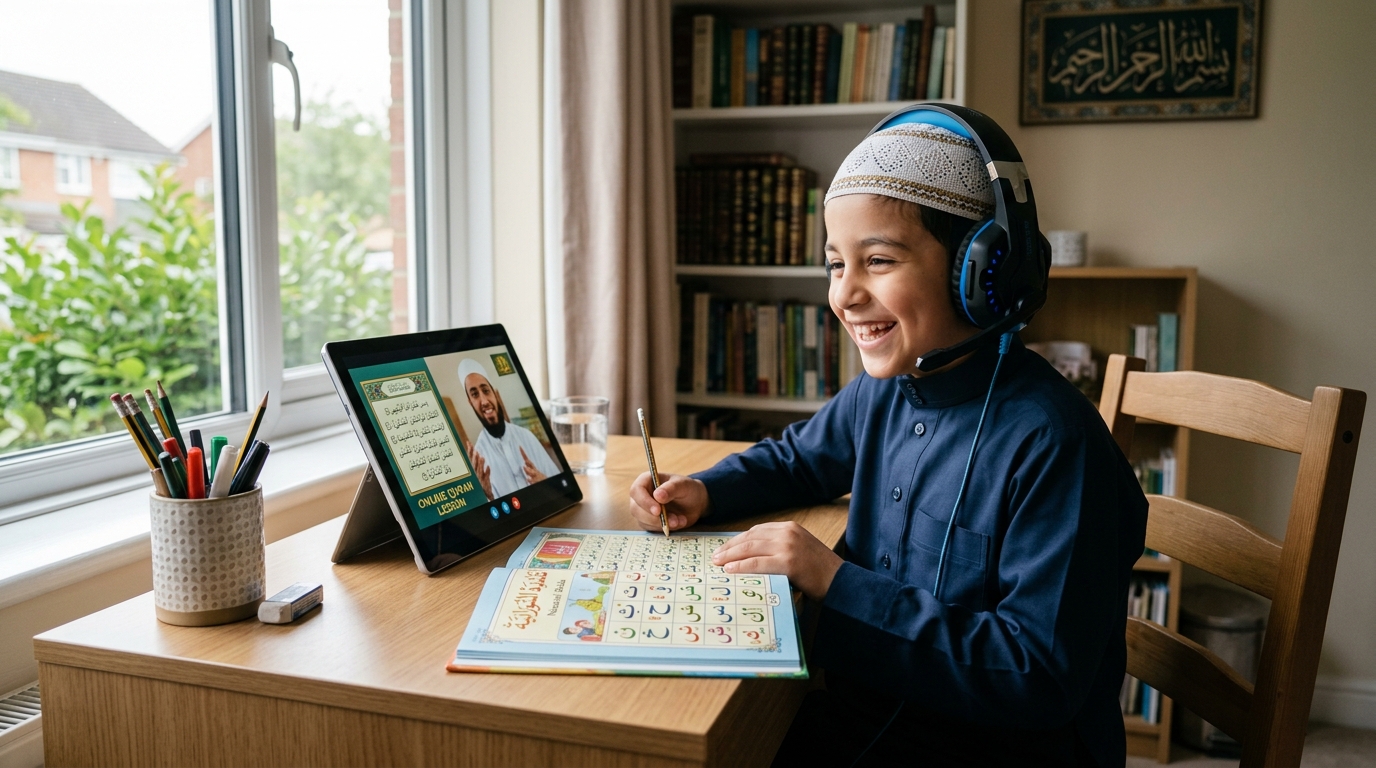
To teach kids Quran at home successfully, create a dedicated calm study corner, anchor a 15-minute practice session directly after a daily prayer (like Asr or Maghrib), use sensory learning tools (playdough letters, flashcards), and play slow Murattal recitations daily. Pair home revision with an accredited online 1-on-1 tutor to ensure flawless Tajweed correction.
The 5 Pillars of Joyful Home Quran Teaching
Children do not remember the specific grammar rules you lecture them about; they remember the emotional climate of the home. If Quran time feels like an interrogation, their hearts close. If Quran time feels cozy, affectionate, and celebrated, their hearts open.
| Pillar | Focus | Practical Action Item |
|---|---|---|
| 1. The Sacred Environment | Visual & physical comfort | Dedicated low table, soft lighting, child-sized rehal |
| 2. Habit Stacking | Routine consistency | Practice immediately after the same daily prayer |
| 3. Sensory Engagement | Kinesthetic & visual learning | Sand tracing, wooden alphabet puzzles, audio rhymes |
| 4. Positive Discipline | Encouragement over pressure | Sticker milestones, praise of effort, special treats |
| 5. Expert Partnership | Flawless phonetic guidance | Live 1-on-1 virtual tutor handling technical Tajweed |
---
Pillar 1: Build a "Sacred Reading Corner"
Do not teach your child Quran at the kitchen table while dinner is sizzling, the TV is on in the next room, and siblings are running around. Visual and acoustic distractions destroy a child's focus.
- Set up a small, dedicated prayer and Quran corner in their bedroom or living room.
- Place a clean floor rug, a miniature wooden book stand (Rehal), and their personalized colorful Mushaf or Qaida.
- Light a calming scented diffuser (like natural musk or lavender) exclusively during Quran time. Over time, that subtle scent acts as a sensory trigger signaling peace and spiritual presence.
Pillar 2: The Power of "Habit Stacking"
The biggest mistake parents make is practicing at random times: "Come on, let's read your Qaida now before bed!" when the child is already exhausted.
Instead, utilize Habit Stacking—anchoring Quran revision to an unshakeable daily habit: - Option A (Morning Anchor): 10 minutes directly following Fajr prayer before school breakfast. - Option B (After-School Anchor): 15 minutes immediately after the Asr prayer snack. - Option C (Evening Anchor): 15 minutes right between Maghrib and Isha prayers.
When practice happens at the exact same point in the daily sequence, it ceases to be a debate; it becomes as automatic as brushing teeth.
Optional hands-on letter practice
If the child enjoys it, try tracing a large Arabic letter or matching a letter card to the same shape. Use safe, age-appropriate materials and caregiver supervision. Hands-on activities are optional practice choices, not a neurological treatment or a requirement for every child.
For structured early childhood curricula, review our Learn Noorani Qaida Online program.
Pillar 4: How Non-Arabic Speaking Parents Can Coach Effectively
A common anxiety among revert and non-Arab parents is: "How can I teach my child when my own pronunciation is flawed?"
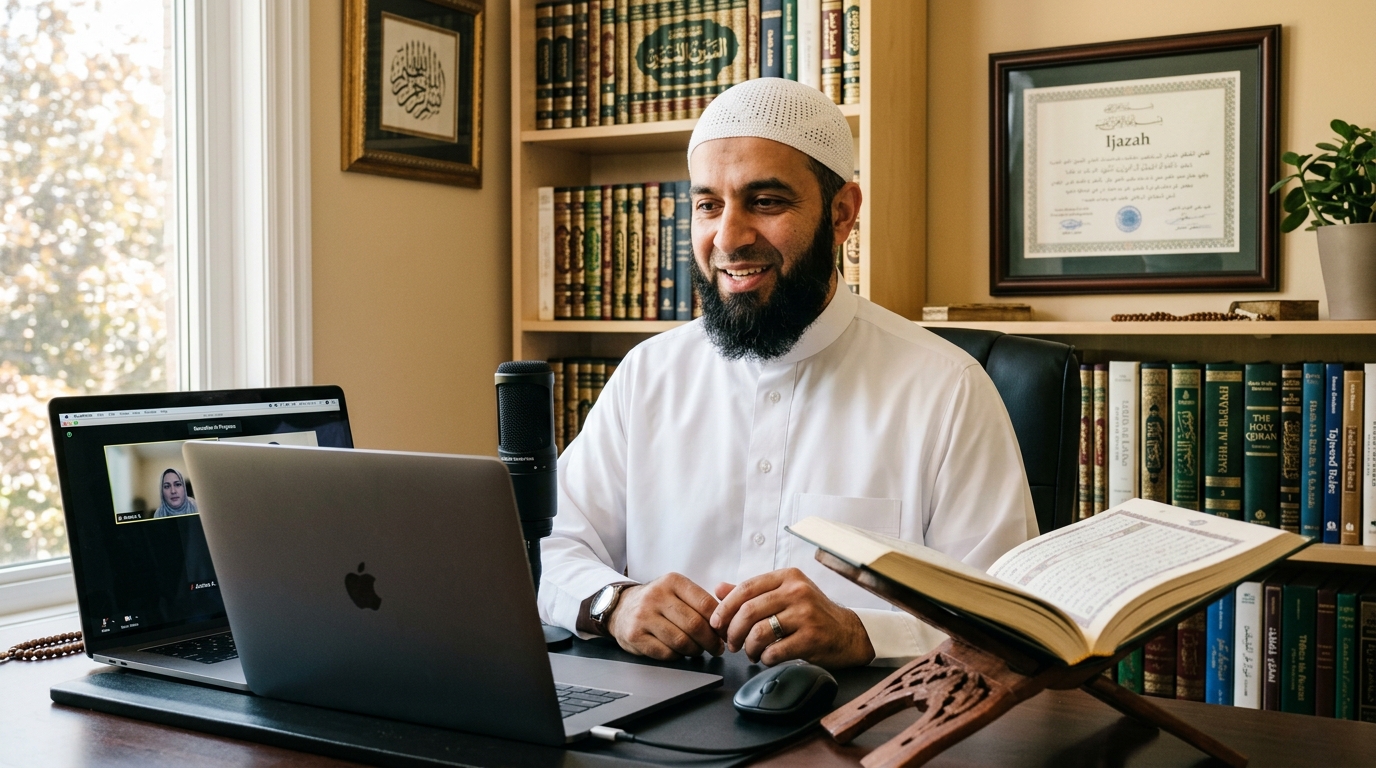
Remember: Your role is to be the Chief Encouragement Officer, not the final phonetic judge. 1. Partner with a Certified Professional: Enroll your child in our live Online Quran Classes for Kids, where an Ijazah-certified tutor conducts the technical pronunciation training twice or thrice weekly. 2. Supervise the Assigned Homework: During home practice, use the audio recordings provided by the tutor. Let the child listen to the teacher's voice note on your phone, pause it, repeat it 5 times, and check off their daily box. 3. Learn Alongside Your Child: Tell your child: "Look, Mommy and Daddy are learning these letters too! Let's see who can pronounce letter Ayn the clearest!" Vulnerability removes the power struggle and turns learning into a joyful family quest.
Explore our Quran Classes for Adults if you wish to upgrade your own reading alongside your children.
Pillar 5: Celebrate Effort, Not Just Flawless Execution
Notice the immense difference between these two parental responses: - ❌ "No! How many times did I tell you that's not a Baa, that's a Taa! Pay attention!" - ✅ "I love how hard you focused on that word! Look closely at the dots—where are they sitting? On top! That makes it our friend Taa. Try it one more time with a big smile!"
The Prophet Muhammad (peace be upon him) said: > "Allah is gentle and loves gentleness in all matters." (Sahih al-Bukhari 6927)
When your child completes a full page of Noorani Qaida or memorizes a new Surah, celebrate! Take them for an ice cream treat, award them a gold star sticker, or let them call their grandparents to recite their new Ayah over speakerphone.
What to Do When Learning Meltdowns Occur
If your child breaks down in tears or digs their heels in: 1. Never match their anger. Lower your voice; do not raise it. 2. Close the book with dignity: Say: "Bismillah, I see our minds are tired today. Let's make Wudu, drink some cold water, give each other a hug, and try again for 5 minutes after dinner." 3. Keep the Quran sacred: Never use reading Quran as a punishment for bad behavior (e.g., "Because you didn't clean your room, you have to read 3 pages of Qaida!"). The Quran must always be a source of honor and comfort.
Conclusion: Planting Seeds for Eternity
The minutes you spend sitting side-by-side on a rug with your child, sounding out the sacred letters of Allah's book, are the most valuable investments you will make in their entire life. Those letters will protect them in youth, comfort them in adulthood, and testify for them in the grave.
If you want expert support to ensure your child learns with authentic Tajweed and deep enjoyment, let QuranHeaven walk with you.
Book your child's free trial class today and meet our warm, certified instructors.