πŸ“ž +1 (317) 751 5969 USA | πŸ’¬ WhatsApp | ✨ Free Trial Class
Online Quran Classes ✨ Updated September 4, 2026 ⏱ 6 min read

Online Quran Classes vs Traditional Quran Classes: Which Is Better?

SA
Reviewed by Sheikh Abdullah Lead Islamic Instructor
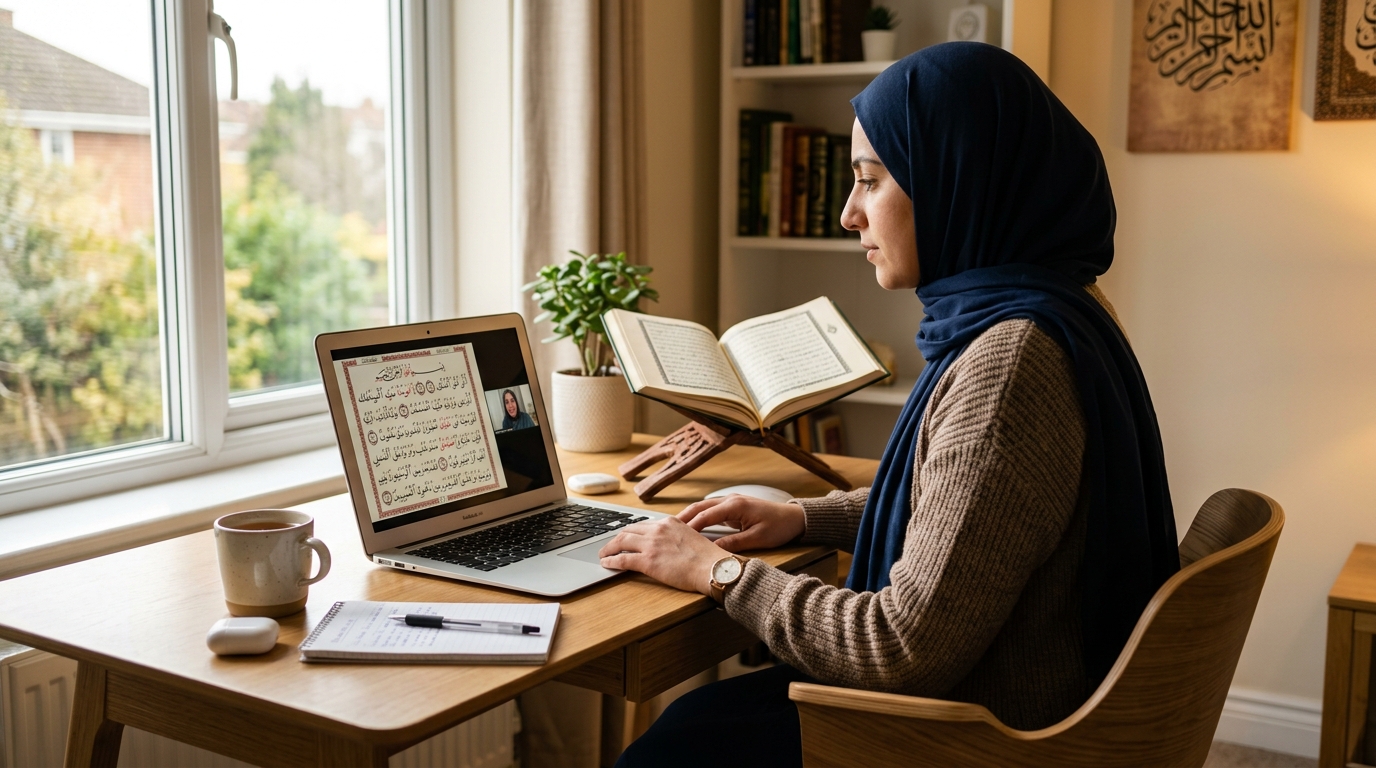
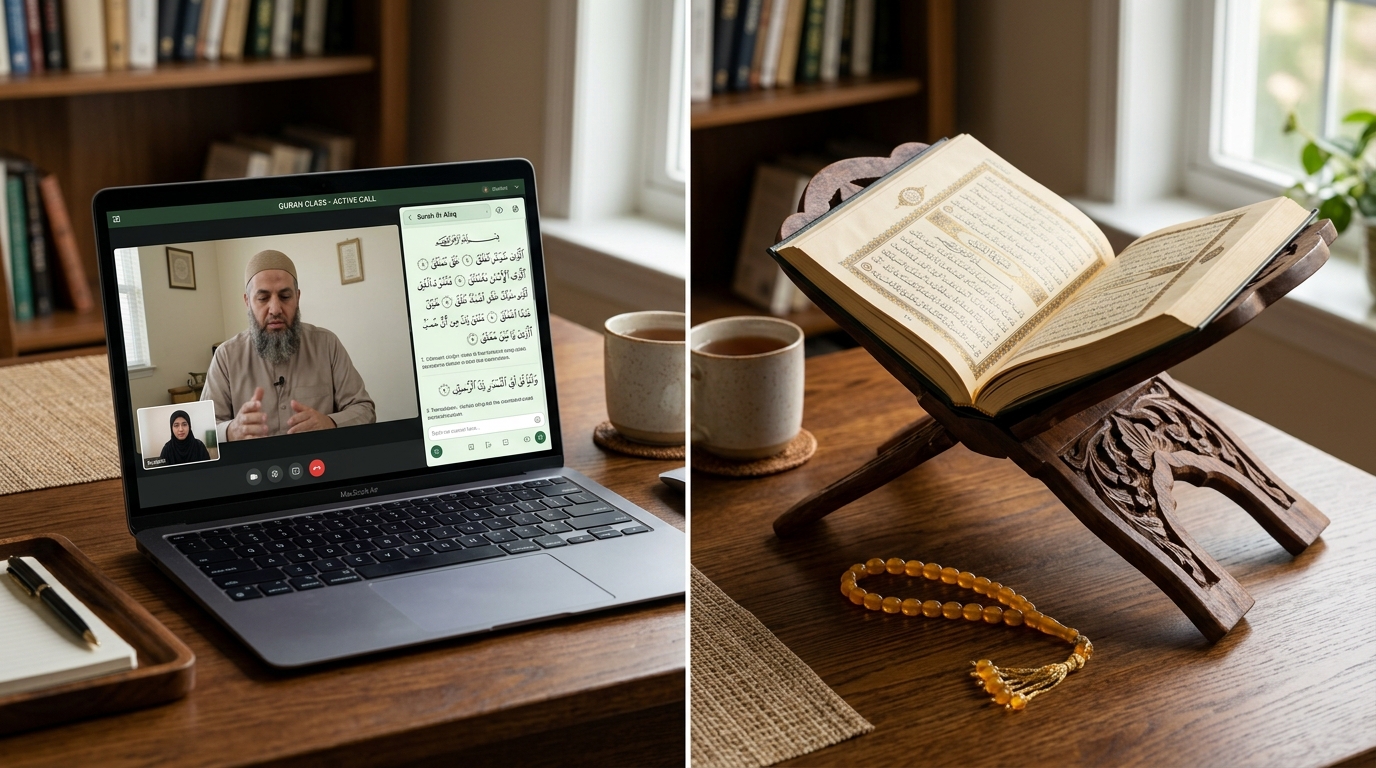
Side by side visual comparison of digital online Quran learning on a laptop versus a traditional classroom madrasah
πŸ’‘ Key Takeaways (TL;DR)
  • Online Quran classes deliver 100% focused one-on-one student attention, whereas traditional madrasahs divide one teacher among 15 to 30 students.
  • Virtual learning eliminates hazardous evening commutes, saving Western Muslim families 4 to 8 hours of weekly travel time.
  • Traditional madrasahs offer physical socialization, but online academies provide customized pacing, gentle pedagogy, and full parental transparency.
  • Data reveals students in 1-on-1 online settings complete the Holy Quran roughly 40% faster than those in crowded group classes.

For generations of Muslim families living in North America, the United Kingdom, Europe, and Australia, Islamic education meant one familiar routine: rushing through weekday rush-hour traffic or spending Saturday mornings dropping children off at the local Islamic center for traditional madrasah classes.

However, over the past decade, high-speed internet, interactive digital whiteboards, and video conferencing have transformed Islamic pedagogy. Today, millions of parents and adult students are asking a fundamental question: Online Quran classes vs traditional Quran classes: which is truly better for my family?

While traditional madrasahs hold a cherished place in our Islamic history, modern virtual learning solves critical logistical, educational, and safety challenges that brick-and-mortar institutions struggle to address.

⚑ Quick Answer

Online Quran classes are significantly better for personalized pacing, Tajweed accuracy, and convenience, offering 100% dedicated 1-on-1 attention from Ijazah-certified native tutors with zero travel time and full parental monitoring. Traditional madrasahs excel primarily in physical community socialization, but suffer from high student-to-teacher ratios (15–30 kids per class) where individual recitation time is severely limited.

The Side-by-Side Comparison: Online vs Traditional Quran Learning

To make an objective, well-informed choice, examine how both models compare across essential educational metrics:

Key Comparison FactorOnline 1-on-1 Quran ClassesTraditional Physical Madrasah
Student-to-Teacher Ratio1:1 (Private tutoring)1:15 to 1:30 (Group classroom)
Actual Recitation Time25–30 full minutes per lesson3–5 minutes per student per session
Tutor QualificationsVetted native Arabic scholars with verified IjazahsDependent on local volunteers or whoever is available
Scheduling Flexibility24/7 choice of days and hoursRigid fixed schedules (e.g., Sat 9am–1pm)
Parental OversightLive observation from your living roomParents wait in parking lot or drop-off zone
Pacing & CurriculumTailored to student's exact learning velocityUniform group speed; struggles overlooked
Commute Time & Fuel0 minutes; learn from home30–60 minutes roundtrip daily commute
Disciplinary EnvironmentGentle, child-centered positive reinforcementVariable; risk of old-fashioned harsh reprimands
SocializationVirtual peer events & webinarsDirect in-person peer interaction

---

1. The Recitation Math: Why 1-on-1 Outperforms Groups The Holy Quran cannot be mastered through passive listening alone. Pronouncing Arabic letters with correct Makharij (points of articulation) requires active vocalization, immediate error interception, and repetitive muscular conditioning.

Consider the simple mathematics of a traditional madrasah session: - A class runs for 90 minutes with 20 children and 1 teacher. - Even if the teacher spends every single second listening to students recite, each child receives an average of only 4.5 minutes of individual feedback! - For the remaining 85.5 minutes, the child sits quietly, loses focus, gets distracted by peers, or reads ahead unsupervised.

In contrast, in a 30-minute private online lesson through QuranHeaven, your child receives 30 continuous minutes of dedicated coaching. The tutor hears every breath, catches every mispronounced Kasra, and ensures no error goes unnoticed. In educational terms, one month of 1-on-1 online classes provides more direct speaking time than six months of crowded madrasah attendance.

2. Safety, Transparency, and Mental Peace In recent years, Muslim parents in the West have become rightfully vigilant regarding the safety and psychological well-being of their children: - Zero Risk of Bullying or Mistreatment: In a home setting, your child is never exposed to playground peer pressure, teasing, or physical intimidation. - Full Parental Transparency: You can sit comfortably in the room, observe the teacher's demeanor, and ensure lessons are conducted with dignity, respect, and warmth. - Respectful Sunnah Pedagogy: Tragically, some traditional weekend schools still employ outdated disciplinary methods that cause anxiety. At QuranHeaven, our instructors are trained in child psychology, adhering strictly to the prophetic principle: > "Make matters easy and do not make them difficult; give glad tidings and do not drive people away." (Sahih al-Bukhari 69)

3. The Commute and Schedule Advantage Modern Western family schedules are packed with academic homework, school activities, and parental work commitments. - Adding a 45-minute roundtrip commute during winter evenings through snow or heavy rain creates immense family friction. - Children arrive at the madrasah exhausted and irritable, severely diminishing their capacity to absorb Arabic phonetics. - Online Quran lessons eliminate the commute entirely. Your child can transition seamlessly from public school homework to their 25-minute Quran lesson at their personal desk, fresh and alert.

Explore our flexible Online Quran Classes for Kids and discover schedule options tailored to your family's routine.

4. Access to World-Class, Ijazah-Certified Scholars Unless you live adjacent to a major Islamic metropolis, local community centers are often constrained by a limited pool of qualified Arabic instructors. Many weekend teachers are well-meaning volunteers who may themselves lack deep Tajweed mastery or formal Ijazah certification.

Virtual Quran education democratizes access to elite scholarship: - Learn directly from graduates of prestigious Islamic universities (such as Al-Azhar University). - Study under instructors who hold an unbroken chain of transmission (Sanad) back to the Prophet Muhammad (peace be upon him). - Sisters and young girls can learn from world-class female scholars through our dedicated Online Quran Classes for Ladies.

When Does a Traditional Madrasah Make Sense? To remain completely objective, traditional mosques offer one undeniable advantage: physical community connection. - If your child has zero Muslim peers at their secular school, attending a weekend Islamic center provides valuable social connection, Eid gatherings, and group prayer experience.

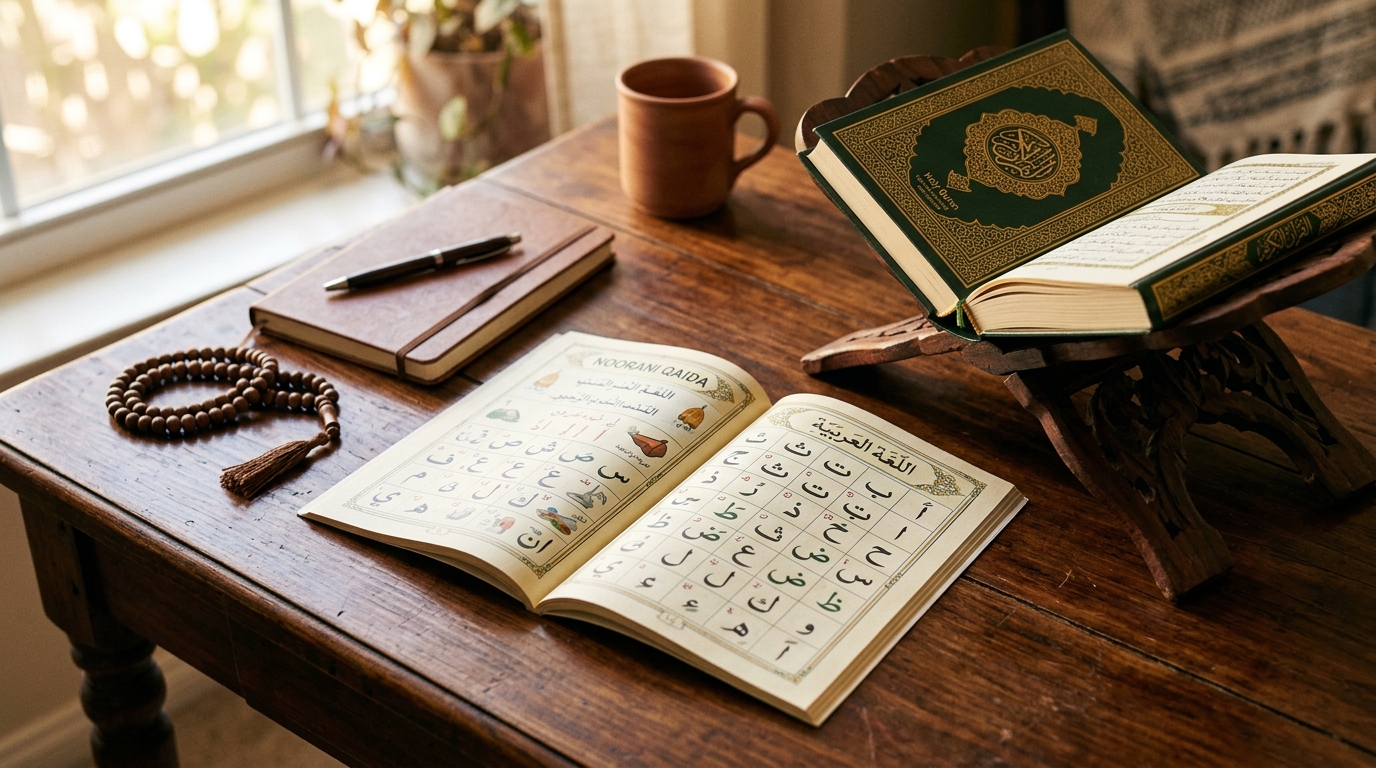
The Optimal Modern Solution (The Hybrid Model): Many forward-thinking Muslim families now adopt the best of both worlds: 1. They utilize online 1-on-1 Quran classes 3 to 4 days weekly for serious, rapid Quranic literacy, Noorani Qaida, and Tajweed mastery. 2. They attend the local mosque on Fridays and weekends for communal Salah, youth halaqa discussions, and social events.

This hybrid approach ensures your child gains flawless Quranic pronunciation while remaining deeply rooted in their local Muslim community.

Conclusion: Make the Choice That Elevates Your Recitation

If your goal is rapid fluency, impeccable Tajweed accuracy, safe nurturing instruction, and family convenience, online 1-on-1 Quran classes represent the superior modern standard.

Thousands of students worldwide have unlocked the joy of fluent recitation through QuranHeaven's structured online programs.

Experience the difference firsthand. Book your free 1-on-1 trial class today and give your child the gift of authentic Quranic education from home.

SA

Sheikh Abdullah βœ” Verified Instructor

Lead Islamic Instructor at QuranHeaven

Specializes in accessible Quranic education, structured Tajweed methodologies, and individualized curriculum adaptations for learners worldwide.

Frequently Asked Questions

Yes, and frequently more effective. In a 60-minute group madrasah class of 20 students, each child recites to the teacher for only 3 to 5 minutes. In a 30-minute private online lesson, the student receives 100% active speaking time, resulting in faster correction and superior Tajweed retention.
Online Quran classes generally cost between $40 and $120 per month for multi-day weekly private 1-on-1 tutoring. Traditional weekend Islamic schools often charge similar monthly tuition ($50 to $150) plus registration, books, uniforms, and substantial fuel/travel costs.
Yes, provided the sessions are designed for young attention spans. 25-minute one-on-one sessions utilizing digital interactive whiteboards, screen-shared color-coded Mushafs, and verbal rewards maintain higher active engagement than sitting passively in a 2-hour group classroom.
Yes. Most reputable online academies employ certified female scholars (Alimahs and Hafidhas), providing a comfortable, private, and culturally safe learning environment for sisters, teenage girls, and young children.
Found this guide helpful?
← Back to Blog
πŸ’¬
✨ Enroll Now πŸ“ž Call Us πŸ’¬ WhatsApp