- Individual teaching allows focused feedback and adjusted activities.
- A private format does not guarantee a particular rate of progress.
- Check a fresh example and delayed recall rather than only page counts.
One-to-one Quran lessons let a tutor focus on one learner’s reading and adjust the next activity. The benefit depends on how that lesson time is used; there is no supported universal percentage for faster progress.
What individual feedback should look like
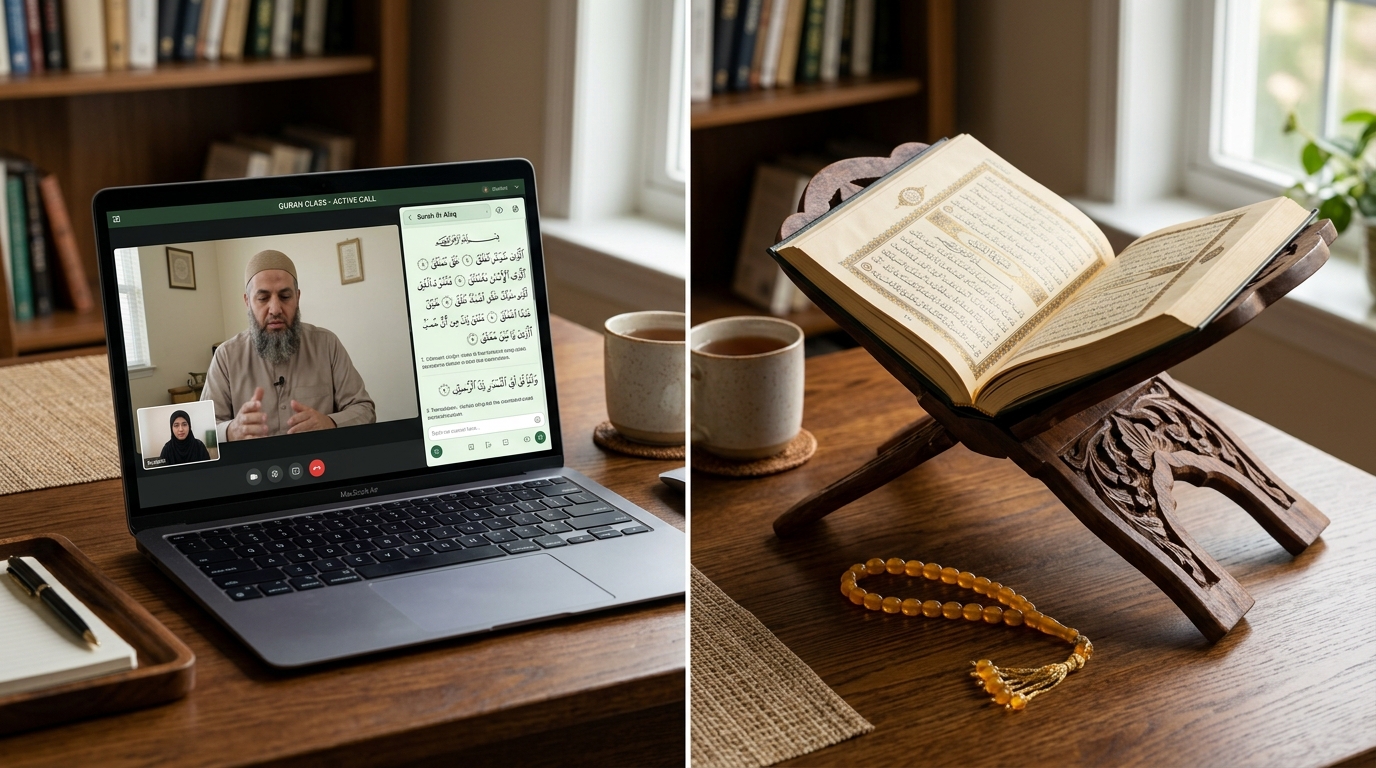
A useful correction has three parts: the tutor identifies the issue, models the intended sound or reading, and listens to the learner try it again. The tutor should then check the same skill in a different example. Repeating after a teacher is useful practice, but does not by itself show independent reading.
For a child
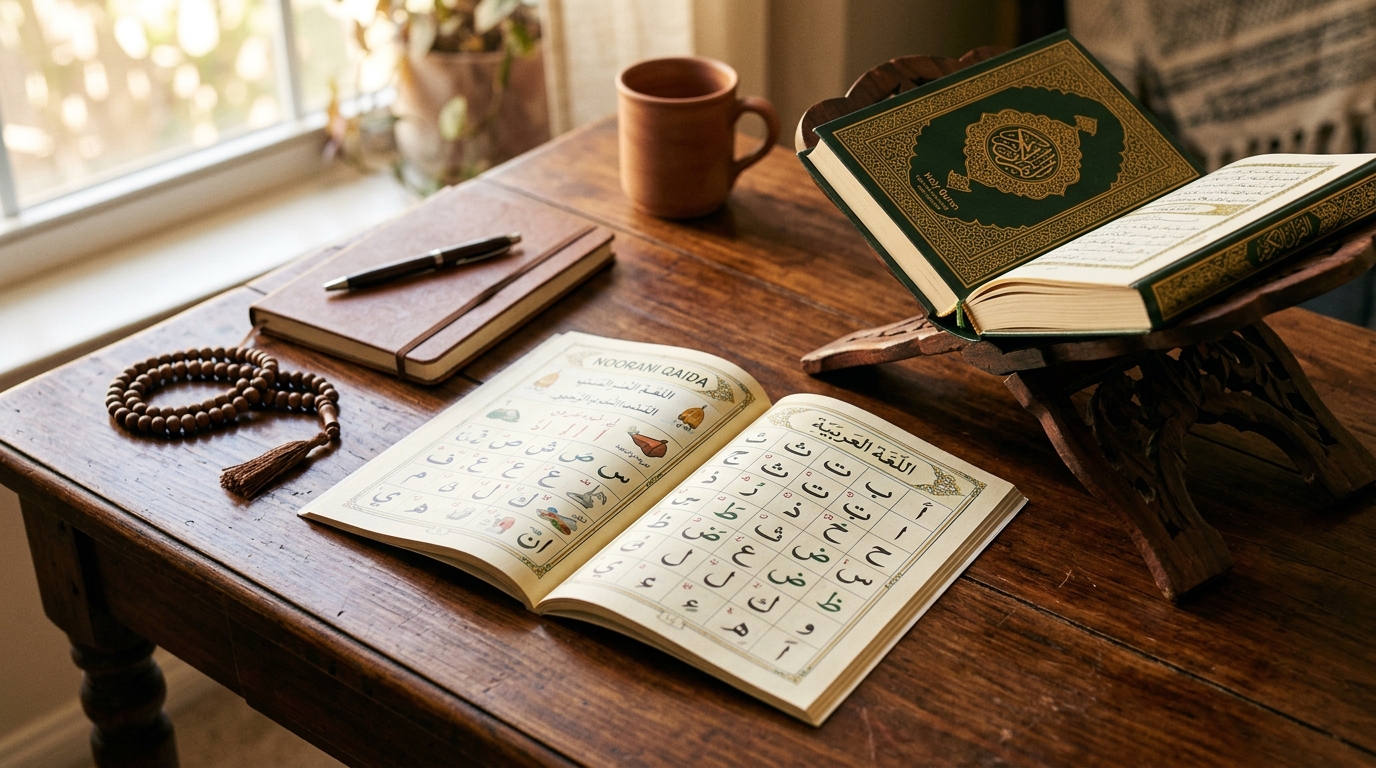
Choose one small target and leave time for a comfortable response. If the child confuses ب and ت, a tutor might show one at a time, compare the dots, and mix their order for a fresh attempt. This is an illustrative activity, not a promised result. A parent can ask what help was needed and what to practise next.
For an adult
Begin with the skill that needs attention. An adult who reads connected text may need targeted recitation correction rather than a complete restart at the alphabet. A beginner may need letter recognition and short vowels first. Ask for a private space to make mistakes and a task that fits the available practice time.
Tradeoffs to consider
Private lessons may cost more per learner than a group and offer less peer interaction. A one-to-one format also cannot compensate for unclear explanations, unreliable attendance or a poor connection. Judge the teaching sample rather than the label.
A simple progress check
Keep a note with the date, passage or skill, prompts needed and next exercise. Revisit an earlier sample after a gap. Look for stable accuracy and growing independence; avoid comparing a child’s page count with another learner’s. See the sample progress record and published lesson plans.
Choose your starting point
Explore kids’ lessons, adult lessons or Tajweed. In a trial, ask the tutor to explain one correction and the reason for the proposed next step.