- Replacing fear-based discipline with enthusiastic positive reinforcement nurtures a lifelong, loving bond between the child and the Quran.
- Utilizing 20 to 25-minute gamified micro-sessions aligns with a child's natural attention span, preventing mental burnout.
- Multisensory tools—including Arabic playdough, letter bingo, sticker reward charts, and Quran storybooks—transform abstract phonics into joyful play.
- Parents must celebrate small daily efforts and perseverance rather than demanding instant, flawless perfection.
For many Muslim adults, memories of childhood Quran classes evoke a sense of dread: sitting rigidly in crowded rooms, fearful of a stern teacher's reprimand, and counting down the painful minutes until the lesson ended.
Tragically, this punitive approach has alienated countless young Muslims from the book of Allah. When children associate the Holy Quran with anxiety, tears, and parental frustration, their subconscious mind builds an emotional wall against the faith.
Islam does not teach intimidation. The Prophet Muhammad (peace be upon him) was the gentlest teacher in human history. He smiled with children, played with them, and famously instructed: > "Facilitate things and do not make them difficult; bring glad tidings and do not repel people." (Sahih al-Bukhari 6125)
How can parents and educators apply this prophetic wisdom today? How can we make Quran learning easier, exciting, and deeply enjoyable for kids?
Here are proven, practical strategies to turn Quran time from a daily battle into your child's favorite part of the day.
To make Quran learning enjoyable for kids, replace pressure with positive reinforcement, keep sessions to 20–25 minutes, incorporate sensory games (playdough letters, sticker charts, Arabic bingo), and share the heroic stories behind the Surahs. Partner with patient, certified tutors who celebrate effort and build emotional safety.
6 Creative Strategies to Transform Your Child's Quran Experience
The following toolkit transforms tedious rote drills into an interactive learning adventure:
1. Choose a comfortable activity length
There is no reliable attention-span formula that sets the same lesson length for every child of an age. Observe engagement, offer a familiar break and reduce or change the task if the child becomes uncomfortable. Agree paid session lengths separately with admissions.
---
1. Choose a comfortable activity length
Explore our child-tailored Online Quran Classes for Kids utilizing these exact micro-learning principles.
2. Incorporate Kinesthetic Sensory Play
Children do not experience the world solely through static black-and-white print. They learn by touching, moving, and building: - Playdough Arabic Letters: Give your child non-toxic playdough. Challenge them to roll out the snake shape for س (Seen) or form the three dots for ث (Thaa). - Sensory Sand Tracing: Pour colorful craft sand onto a shallow cookie baking tray. Have your child trace the letter ج (Jeem) with their finger while pronouncing its sound. - Arabic Letter Hopscotch: Tape laminated Arabic letters to your living room floor. Call out a letter sound ("Where is Khaa?") and let them jump onto the correct square with excitement.
These sensory activities build deep neuromuscular memory while feeling like pure playtime. For early childhood materials, review our Learn Noorani Qaida Online curriculum.
3. Harness the Power of Gamification and Visual Trackers
Children are wired to love visual progress: - The Quest Chart: Create a "Quran Journey Map" on their bedroom wall styled like an adventurous quest trail. Every time they master a page of Qaida or memorize a Surah, they move their personalized avatar forward. - Celebratory Milestones: Agree on exciting rewards in advance: "When you reach Surah Al-Fil, we will have a family pizza night! When you complete the entire Qaida, we will take a special trip to the zoo!" - Celebrate the Effort, Not Just Flawless Output: Say: "MashaAllah, I am so proud of how patiently you tried letter Daad today!" Praise builds resilience.
4. Bring the Surahs to Life Through Storytelling
Children love stories. Too often, kids are forced to memorize short Surahs without knowing what the words mean: - Before teaching Surah Al-Fil (The Elephant), tell them the thrilling story of the army of elephants, King Abrahah, and the miraculous little birds (Ababil) sent by Allah to protect the Kaaba! - Before teaching Surah Quraysh, explain how ancient trading caravans journeyed across the desert in winter and summer. - When children understand the narrative context, the verses transform from abstract Arabic sounds into vibrant, memorable movies in their imagination.
5. Play the "Teach Mommy & Daddy" Role Reversal
Children spend all day being told what to do by adults. Giving them the steering wheel builds immense pride and confidence: - Sit down with your child and say: "I need your help! I keep forgetting how to pronounce this letter. Can you be my Ustadh/Ustadhah and teach me?" - Intentionally make a silly mistake (e.g., calling ب a Taa). Watch your child giggle and correct you: "No, Mommy! There is one dot underneath, so it's a Baa!" - By teaching you, they reinforce their own mastery without feeling tested.
6. Partner with Warm, Inspiring Educators
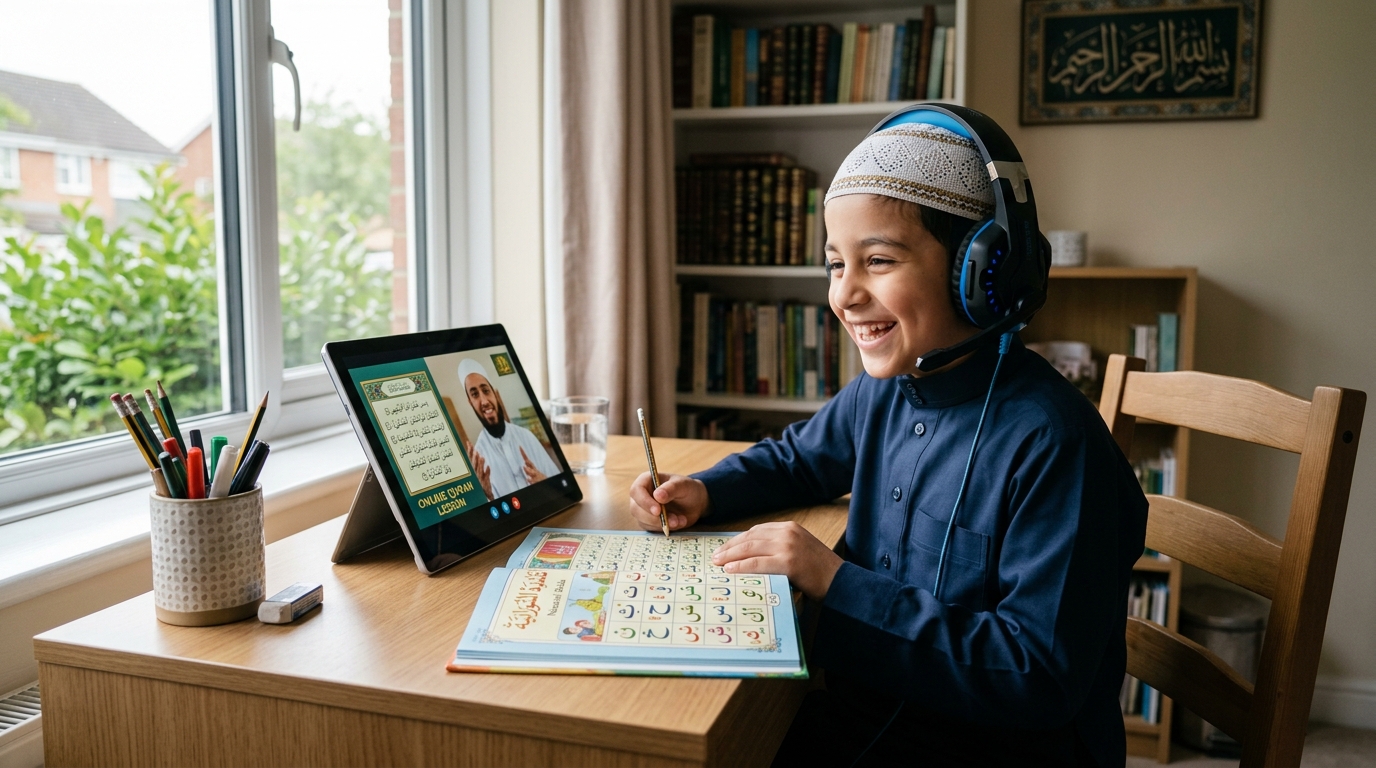
Your child's teacher is the lens through which they view Islam. A tutor who smiles, laughs, gives high-fives through the webcam, and offers enthusiastic praise creates a safe sanctuary for learning.
At QuranHeaven: - Our instructors are trained in child psychology and neurodiversity (including ADHD and Autism). - We use interactive digital software where kids can draw, highlight, and earn virtual badges during class. - Sisters and young girls can learn from caring female scholars via our Online Quran Classes for Ladies.
Conclusion: Planting Seeds of Eternal Love
Our ultimate goal as parents is not merely to produce children who can read Arabic letters; it is to nurture believers whose hearts find peace, joy, and comfort in the words of their Lord.
By infusing Quran lessons with patience, warmth, play, and celebration, you ensure that your child grows up loving the Holy Quran for the rest of their days.
Give your child a joyful Quranic experience today. Book your child's free trial class at QuranHeaven and watch their love for learning blossom.