- Online Hifz programs demonstrate comparable and often superior retention rates to traditional madrasahs due to private 1-on-1 daily recitation.
- Students remain in their normal academic schools and home environments, avoiding the social isolation of residential boarding madrasahs.
- Digital portals provide parents with real-time tracking of Sabaq, Sabqi, and Manzil completion, eliminating guesswork.
- Success requires disciplined home study routines, an identical Mushaf edition, and active parental partnership.
For centuries, memorizing the entire Holy Quran (Hifz) was inextricably linked with residential boarding madrasahs or full-time monastic seminaries. Parents had to make an agonizing choice: pull their 9-year-old child out of secular academic schooling and send them away to a boarding facility, or abandon the dream of Hifz altogether.
Over the past decade, high-speed fiber internet, digital learning portals, and live video conferencing have shattered this false dilemma. Today, a rapidly growing number of Muslim children and adults living in the West are asking: Is online Quran memorization truly effective? Can someone really become a certified Hafiz of the Quran from their home bedroom?
The empirical answer from data, student outcomes, and Islamic scholarship is a resounding YES. In fact, for many students, online Hifz offers distinct educational, psychological, and safety advantages over traditional residential institutions.
Online Hifz is exceptionally effective, boasting completion rates comparable to physical madrasahs. Daily 1-on-1 private recitation with Ijazah-certified Huffaz provides intensive error correction without distractions. Online Hifz allows students to maintain their regular academic schooling, enjoy home nutrition and parental support, and track daily Sabaq, Sabqi, and Manzil through digital portals.
Online Hifz vs. Traditional Boarding Madrasah: An Objective Comparison
To understand why online memorization has become the preferred choice for Western Muslim families, examine this comprehensive comparative analysis:
| Educational Dimension | Online 1-on-1 Hifz Academy | Traditional Residential Boarding Madrasah |
|---|---|---|
| Academic Continuity | Students continue regular secular school / college | Academic schooling often halted for 2β4 years |
| Recitation Format | 1-on-1 private session daily (100% attention) | 1 teacher managing 20β30 boys chanting simultaneously |
| Family Connection | Child eats home meals, sleeps in their bed | Child lives away from parents; visits once a month |
| Mental Health & Safety | Safe home environment under parental oversight | Risk of severe homesickness, bullying, or harsh discipline |
| Digital Tracking | Parents receive daily digital progress reports | Parents receive vague quarterly verbal updates |
| Pacing Customization | Paced to the student's unique memory bandwidth | Rigid group deadlines; immense peer pressure |
| Ijazah Authenticity | Verified Ijazah with connected Sanad upon completion | Verified Ijazah upon completion |
---
4 Reasons Why Online Hifz Works So Well
1. The Power of Undivided 1-on-1 Accountability In a physical madrasah classroom, 25 students sit cross-legged on the floor, rocking back and forth and chanting their verses at high volume. The acoustic noise is overwhelming. When a student recites their lesson (Sabaq) to the teacher, other students are constantly interrupting.
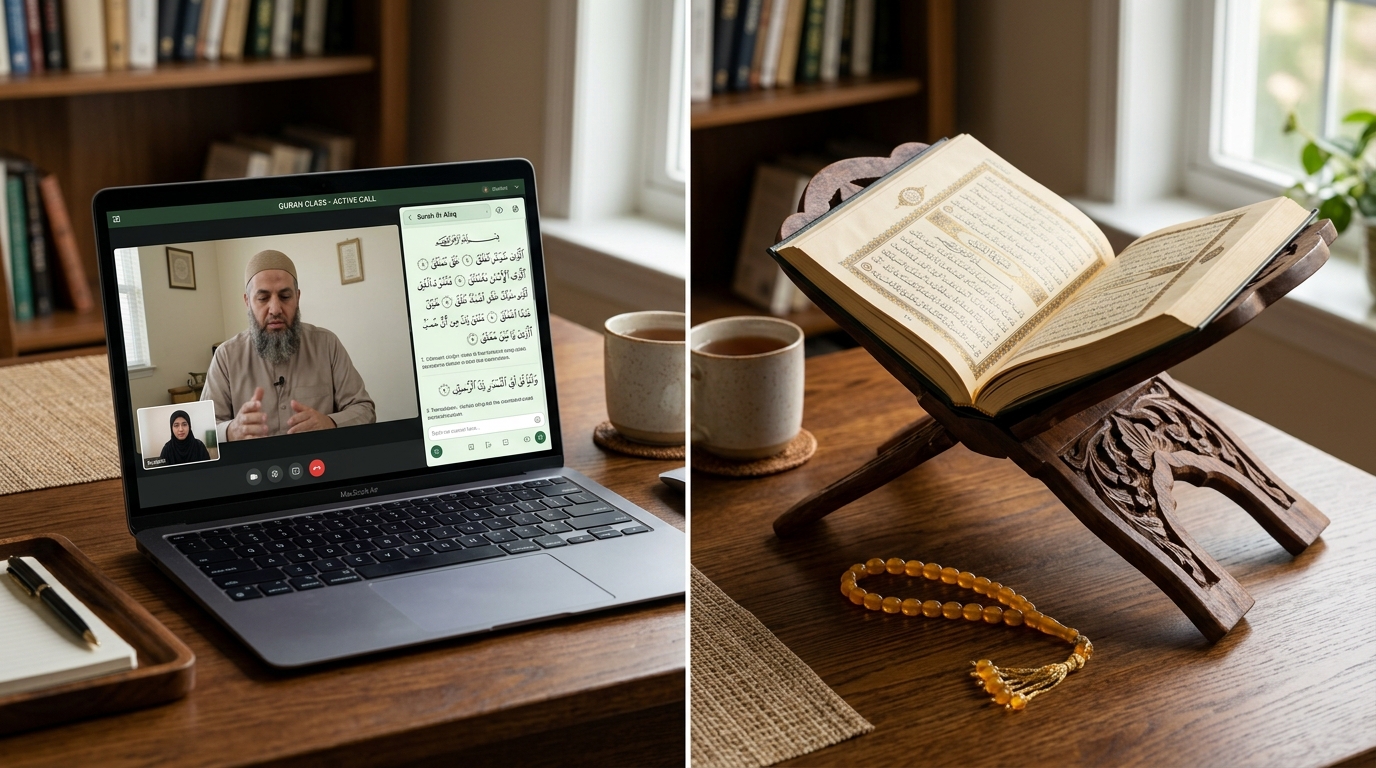
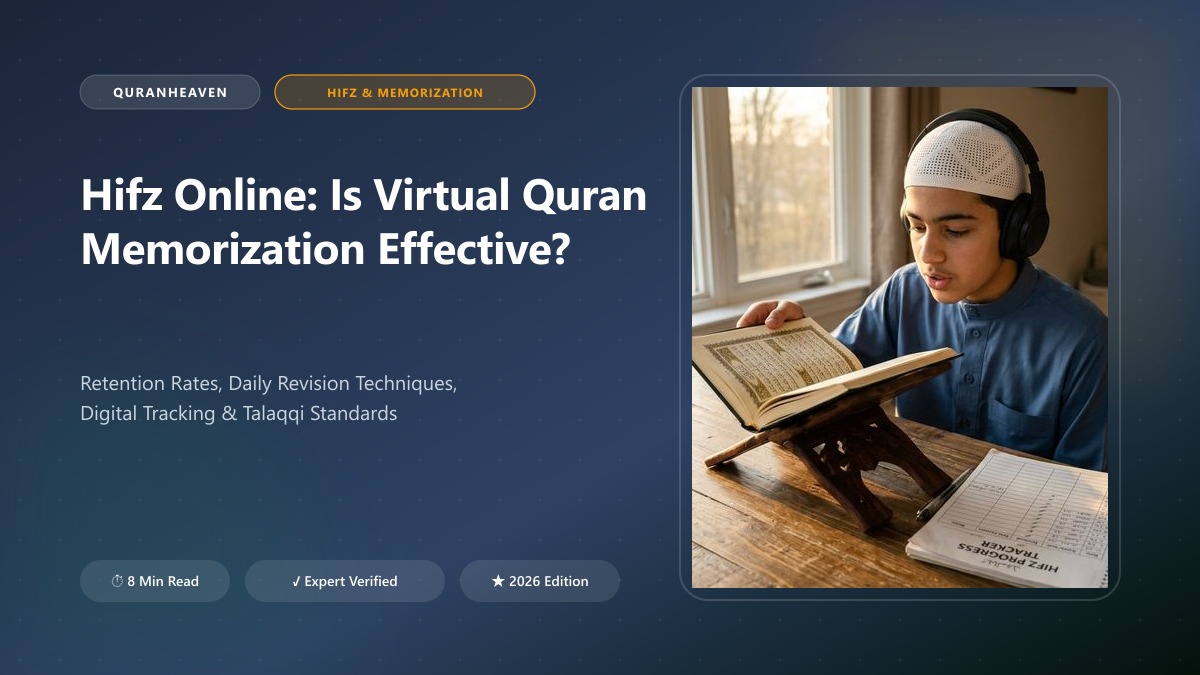
In an online Hifz lesson: - The virtual classroom is a sanctuary of complete silence. - The student wears a headset; the teacher's voice is directly in their ears. - Every single subtle mistakeβa slipped Kasra, a clipped Madd, or a weak Ghunnahβis detected and corrected instantaneously.
2. Preserving Academic Excellence Alongside Islamic Knowledge Historically, one of the greatest tragedies of Western Hifz programs was educational displacement: - Children spent three years out of school memorizing the Quran, but fell drastically behind in mathematics, science, and literacy, struggling for years to reintegrate into secular high schools. - The Online Hifz Advantage: Students attend regular school from 8:30 AM to 3:30 PM. They memorize their Quran lesson in the early morning (6:00 AM β 7:00 AM) and attend their live online revision class in the evening. - They become both a Hafiz of the Quran and an honor roll student, bridging Deen and Dunya effortlessly.
Explore our structured Quran Memorization Course to see our part-time schedules.
3. Digital Accountability and Parent Portals In traditional weekend or evening programs, parents often discover after six months that their child has secretly fallen behind in revision.
Reputable online academies eliminate this blind spot: - After every lesson, the tutor logs the exact verses completed for Sabaq (new lesson), Sabqi (recent revision), and Manzil (older revision) into the student portal. - Parents receive automated weekly summaries showing retention scores, attendance, and upcoming milestones. - Transparency ensures that problems are intercepted within 48 hours, not six months later.
4. Emotional Safety and Parental Bonding A child memorizing the Quran needs emotional warmth, encouragement, nutritious home-cooked meals, and hugs from their parents. - Residential boarding madrasahs frequently subject young children to severe homesickness and psychological isolation. - Online Hifz keeps the family unit intact. You can celebrate your child's milestones together at dinner, listen to their verses before bed, and be their greatest cheerleader.
Review our guide on Positive Quran Parenting for home support frameworks.
---
The 3 Pillars That Make Online Hifz Successful
Online Hifz is not a magic pill; it requires structure and discipline. The families that succeed adhere to three non-negotiable pillars:
Pillar 1: Absolute Daily Consistency (5 Days a Week) Memorizing the Quran is a biological process of neural consolidation. Missing two days in a row causes immediate memory regression: - Maintain a strict 5-day weekly schedule. - Treat online Quran sessions with the same non-negotiable importance as medical appointments or school exams.
Pillar 2: The Sacred Post-Fajr Routine The most successful online Hifz students memorize their new lesson independently between 6:00 AM and 7:00 AM right after Fajr prayer: - The mind is refreshed after sleep. - Memorizing in the morning and reciting to the online tutor in the late afternoon allows the brain hours of subconscious consolidation.
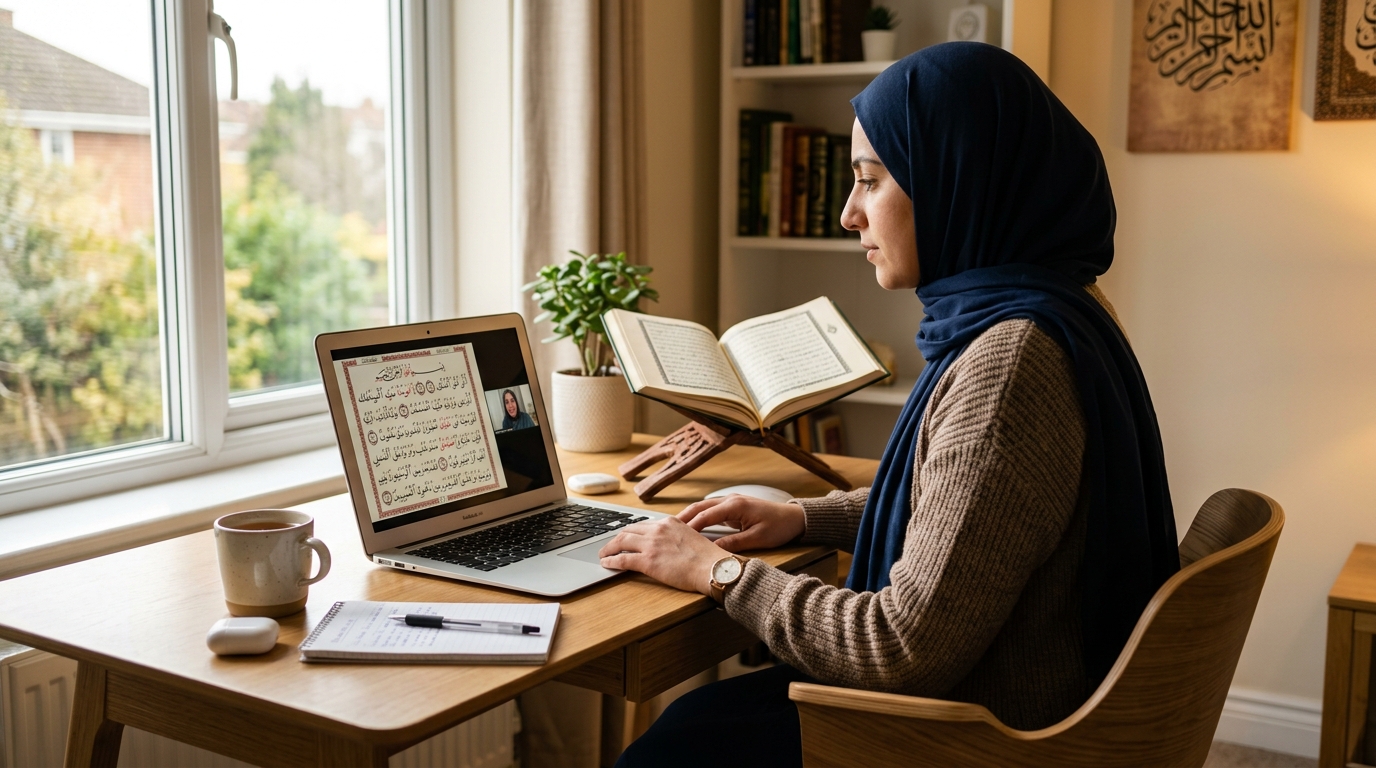
Pillar 3: A Dedicated, Quiet Study Space Never allow your child to attend their online Hifz lesson from the living room sofa with siblings watching cartoons in the background. - Provide a quiet desk, a good desktop or laptop monitor, and a quality noise-cancelling headset. - Use a single physical 15-line Madinah Mushaf copy to preserve photographic visual memory.
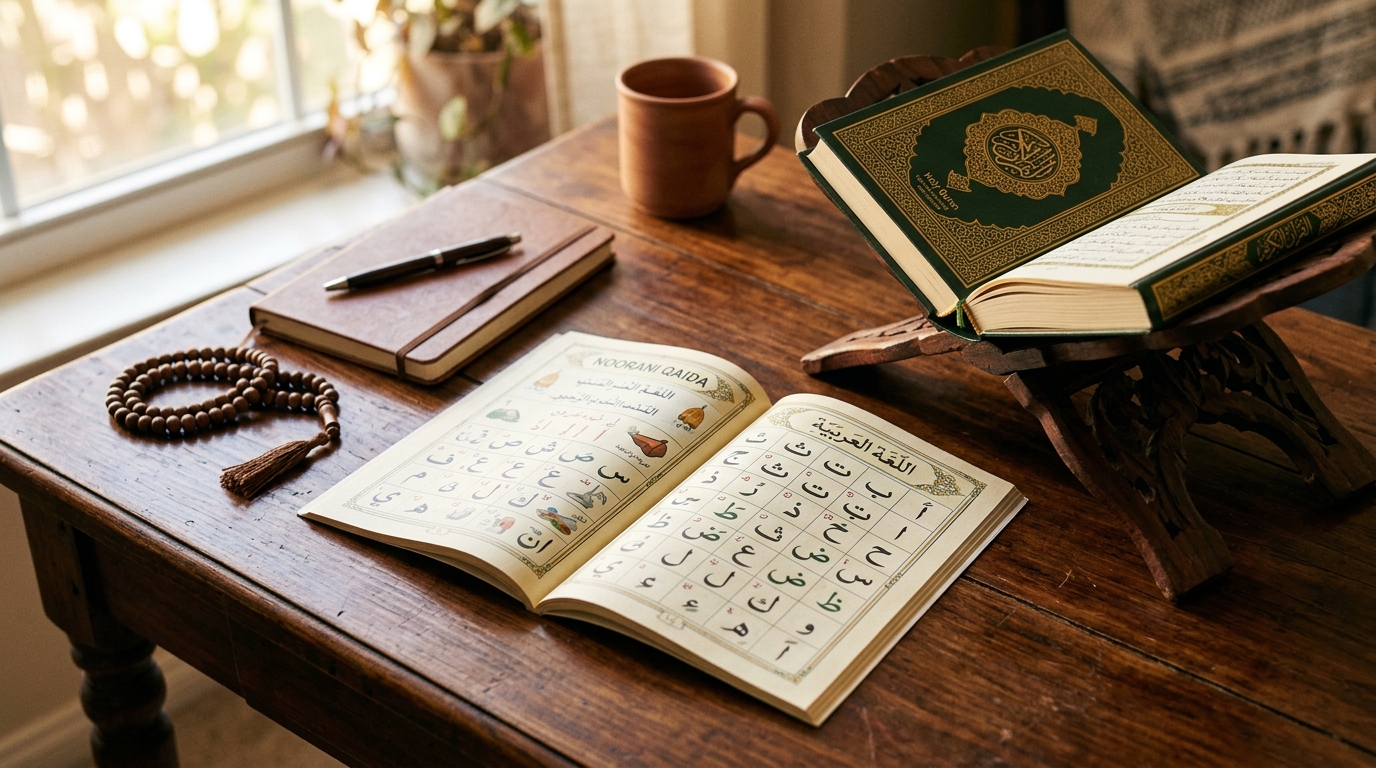
For students who need to polish their reading before entering Hifz, see our Learn Noorani Qaida Online and Online Tajweed Course.
Can Adults Memorize Quran Online?
Yes! Online Hifz is particularly revolutionary for working adult professionals, university students, and homemakers: - Adults cannot drop their careers to attend a full-time seminary. - With online 1-on-1 tutoring, an adult can memorize a half-page daily, completing the entire Quran or key chapters (Surah Al-Baqarah, Surah Al-Kahf, Juz Amma) over several years. - Sisters can study in complete privacy with certified female Hafidhas via our Online Quran Classes for Ladies.
Conclusion: The Quran in Your Heart, from Your Home
The technology of our era is a profound blessing and an Amanah (trust) from Allah. For the first time in Islamic history, you can sit in your own living room in London, New York, Toronto, or Sydney, and study knee-to-knee virtually with an Ijazah-certified scholar in Cairo or Medina.
Becoming a Hafiz of the Quran is fully achievable right from your home.
Take the first step toward this eternal crown of glory. Book a comprehensive Hifz evaluation class at QuranHeaven today and let our master Huffaz map out your memorization blueprint.