Ultimate Tajweed Learning Guide
Master the art of Quranic recitation with our comprehensive guide to Tajweed rules. From Makharij to Madd, learn everything you need to recite the Quran as it was revealed.
✔ Based on classical Tajweed scholarship
✔ Verified by Ijazah-certified instructors
✔ Covers all essential and advanced rules
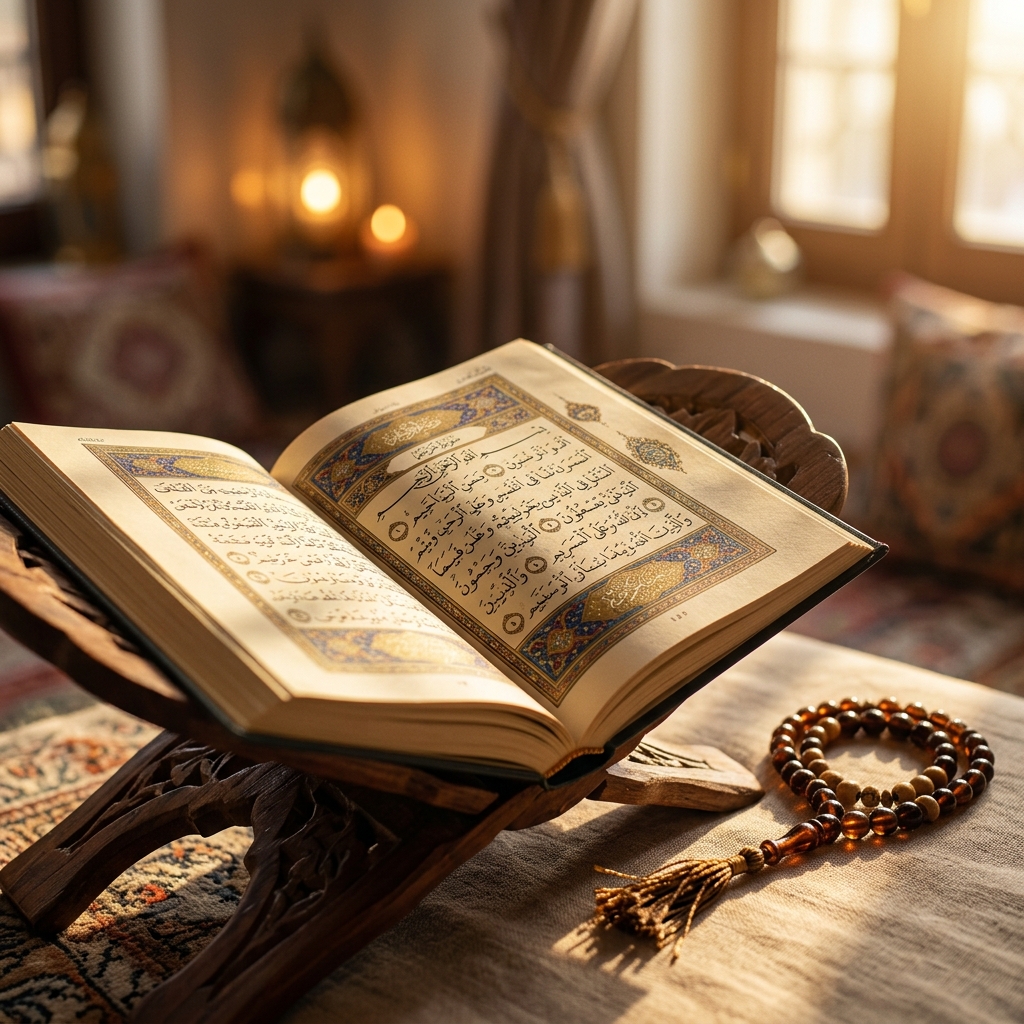
What is Tajweed? Tajweed (تجويد) literally means "improvement" or "making better." In Quranic context, it is the set of linguistic and phonetic rules governing the correct pronunciation of every letter and word in the Quran. Tajweed ensures every letter is pronounced from its correct Makhraj (articulation point) with proper Sifaat (characteristics), preserving the Quran's meaning and beauty as revealed to Prophet Muhammad ﷺ. The Quran commands: "And recite the Quran with measured recitation" (Surah Al-Muzzammil, 73:4).
What is Tajweed?
Tajweed (تجويد) is derived from the Arabic root J-W-D, meaning "to make better" or "to improve." In Islamic terminology, it is the science of reciting the Quran with correct pronunciation, articulation, and rhythm — exactly as it was revealed to Prophet Muhammad ﷺ and transmitted through an unbroken chain of certified Ijazah-certified teachers.
The Quran itself commands proper recitation in Surah Al-Muzzammil (73:4): "And recite the Quran with measured recitation" (وَرَتِّلِ الْقُرْآنَ تَرْتِيلًا). The word Tarteel (ترتيل) means slow, deliberate, and beautiful recitation with proper Tajweed.
📜 Why Tajweed is Not Optional
Incorrect pronunciation can completely change the meaning of Quranic words. For example:
- Qalb (قلب) means "heart" — but if you mispronounce the Qaf, it could sound like Kalb (كلب) meaning "dog"
- Rabb (رب) means "Lord" — mispronouncing the Raa changes it to a meaningless sound
- The letter Ayn (ع) and Hamzah (ء) are frequently confused by non-native speakers, changing word meanings
Makharij al-Huroof: 17 Articulation Points
Makharij al-Huroof (مخارج الحروف) refers to the precise points in the vocal tract where each Arabic letter is articulated. Classical Tajweed scholars identify 17 articulation points grouped into 5 main areas:
1. Al-Jawf (The Oral Cavity)
One point — produces the three Madd letters: Alif (ا), Waw (و), and Yaa (ي) when they are in a state of prolongation.
2. Al-Halq (The Throat)
Three points producing 6 letters: Hamzah (ء), Haa (ه), Ayn (ع), Haa (ح), Ghayn (غ), Khaa (خ).
3. Al-Lisan (The Tongue)
Ten points producing 18 letters — the largest category. Includes Qaf (ق), Kaf (ك), Jiim (ج), Sheen (ش), Yaa (ي), and more from different tongue positions.
4. Ash-Shafataan (The Lips)
Two points producing 4 letters: Faa (ف), Baa (ب), Meem (م), and Waw (و).
5. Al-Khayshoom (The Nasal Cavity)
One point producing Ghunnah (nasalization) — a sound that comes from the nose, used in Noon and Meem Mushaddad.
Deepen your understanding with our detailed guide on Makharij al-Huroof and learn how each letter is produced correctly.
Noon Sakin & Tanween Rules
When a Noon Sakin (ن with Sukoon) or Tanween (double vowel ـً ـٍ ـٌ) appears, the following letter determines one of four rules:
1. Izhaar (Clear)
Pronounce Noon/Tanween clearly without Ghunnah. Occurs before 6 throat letters: ء ه ع ح غ خ.
2. Idgham (Merge)
Noon merges into the next letter. Two types: with Ghunnah (before ي ن م و) and without Ghunnah (before ل ر).
3. Iqlab (Change)
Noon/Tanween changes to Meem with Ghunnah. Occurs only before the letter Baa (ب).
4. Ikhfa (Hide)
Noon/Tanween is pronounced with partial nasalization (Ghunnah) without emphasizing the tongue. Occurs before the remaining 15 Arabic letters.
Master these rules in our online Tajweed course with 1-on-1 guidance from certified instructors.
Meem Sakin Rules
When a Meem Sakin (م with Sukoon) appears, three rules apply depending on the following letter:
- Idgham Shafawi — When Meem Sakin is followed by another Meem (م), the two merge with Ghunnah
- Ikhfa Shafawi — When Meem Sakin is followed by Baa (ب), it is pronounced with partial hiding and Ghunnah
- Izhaar Shafawi — When Meem Sakin is followed by any other letter, it is pronounced clearly
Madd (Elongation) Rules
Madd (مد) means prolongation or elongation of vowel sounds. There are 6 types of Madd in Tajweed:
Qalqalah Rules
Qalqalah (قلقلة) means "disturbance" or "echo." It applies to 5 letters grouped as قطب جد (Qaf, Ta, Baa, Jiim, Daal). When any of these letters carry a Sukoon, they are pronounced with a slight bouncing or echoing sound.
Three levels of Qalqalah:
- Strongest — When the Qalqalah letter appears at the end of a verse (word-final with Sukoon)
- Medium — When the Qalqalah letter appears mid-word with a Sukoon
- Lightest — When the Qalqalah letter appears mid-word with a Shaddah
Common Tajweed Mistakes
❌ Confusing Heavy & Light Letters
Letters like Saad (ص), Daad (ض), Taa (ط), and Dhaa (ظ) must be pronounced with Tafkheem (heaviness). Non-native speakers often pronounce them light like their non-emphatic counterparts.
❌ Incorrect Ghunnah Duration
Ghunnah (nasalization) on Mushaddad Noon and Meem must be held for 2 counts. Many students either skip it entirely or hold it too long.
❌ Mispronouncing Ayn (ع) and Hamzah (ء)
These two throat letters are frequently confused. Ayn is a deep, constricted throat sound while Hamzah is a glottal stop similar to the catch in "uh-oh."
❌ Over-elongating Madd
Each Madd type has a specific duration (2, 4, or 6 counts). Over-elongating or under-elongating changes the rhythm of Quranic recitation.
Tips for Learning Tajweed Effectively
Listen to renowned Qaris like Sheikh Sudais, Mishary Rashid, or Abdul Basit. Imitate their pronunciation.
Practice with a teacher who provides real-time correction — not just recorded lessons.
Consistent daily practice (10-15 min) beats long weekly sessions. Make Tajweed a daily habit.
Start with Surah Al-Fatiha — master every letter's Makhraj since you recite it 17+ times daily in Salah.
Our online Tajweed course provides 1-on-1 instruction with Ijazah-certified teachers who specialize in correcting the common mistakes non-Arabic speakers make. Book a free trial to experience the difference.
Tajweed FAQs
Recitation Transformed
"I thought I could recite the Quran correctly until my Tajweed teacher showed me my mistakes. The difference between how I recited before and after learning proper Makharij is night and day. I finally understand what Tarteel really means."
— Omar, Student from USAStart Your Tajweed Journey Today
Book a free trial and let an Ijazah-certified teacher assess your current recitation level. You will be amazed at how quickly you improve with personalized 1-on-1 guidance.