QuranHeaven learning guides
Online Quran Classes for Kids: Parent Guide
Assess reading readiness, observe a trial lesson and agree on supervision, practice, session length and fees for your child.
Explore Children’s Quran Classes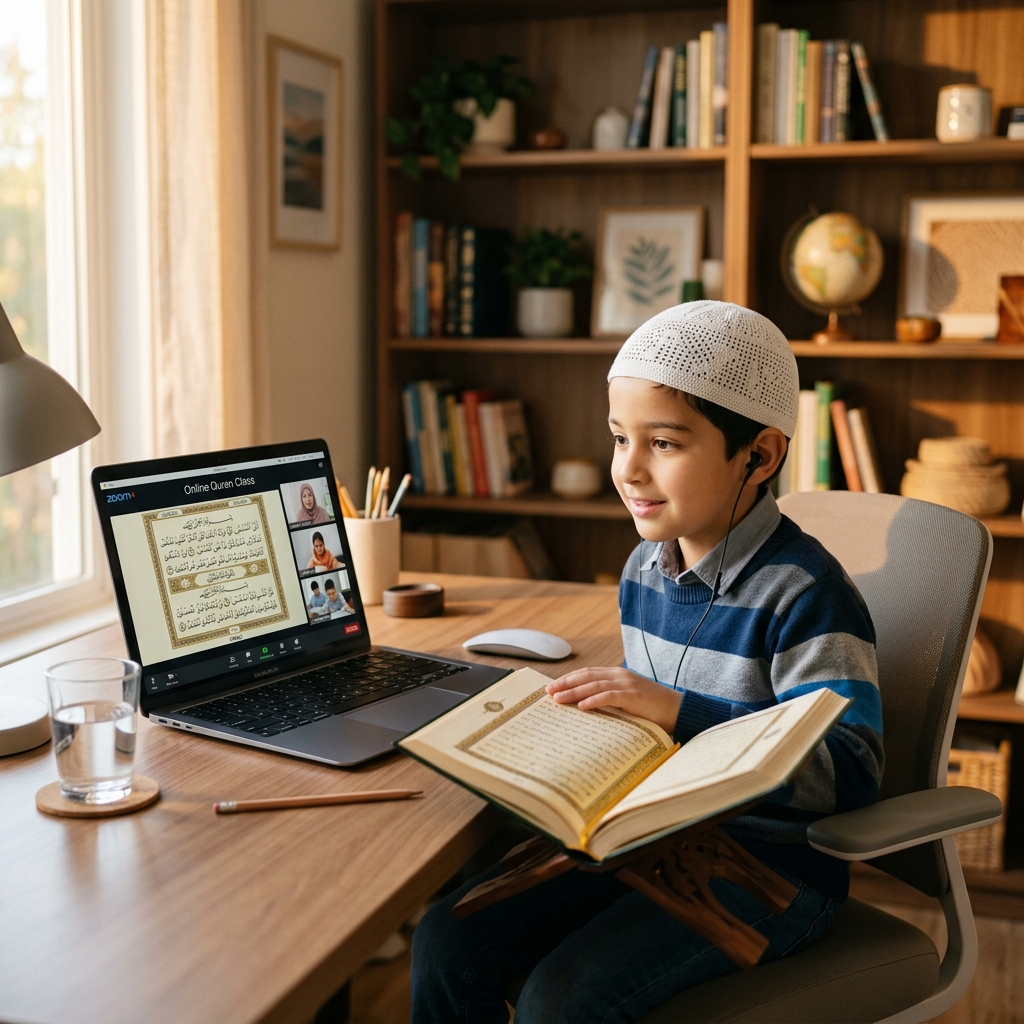
What are online Quran classes for kids? A live lesson can help a child practise Arabic letters, reading or recitation with tutor feedback. Agree on a starting task, session length and parental involvement before the call. A trial helps you observe the explanation, the child’s response and what support is needed. Explore the children’s course.
Is Your Child Ready for Online Quran Classes?
Every child is different, but here are signs your child is ready for online Quran classes:
- ✓ Can try a brief activity with suitable support
- ✓ Shows interest in letters/words
- ✓ Follows simple instructions
- ✓ Comfortable with screen-based learning
- ✓ Can interact with a teacher via video
- • The learner needs a different format or more adult support
- ✗ Cannot focus for even short periods
- ✗ Shows resistance to structured activities
- ✗ Has significant screen fatigue
- ✗ Prefers physical books/hands-on only
The key is to start early but not push too hard. A negative first experience with Quran learning can create long-term resistance. Make the first few sessions fun and pressure-free.
Starting-Level Guide to Quran Learning
Letter Familiarity
A possible starting task is matching a few Arabic letter shapes or hearing a model of a sound. Discuss visual materials, an appropriate response method and a short supported activity. Age alone does not set the session length or predict the learning goal.
Building Reading Skills
If letters are familiar, discuss vowel marks and joining sounds. Try a short item in a different order to distinguish recognition from memorized repetition. Increase the task when the learner can attempt it with less support.
Reading and Recitation Practice
For a child who reads connected text, choose a short passage and one pronunciation point. Ask the tutor to explain what was done independently and what still needed a prompt. Decide on revision before adding new work.
Further Study When Ready
Further Tajweed, memorization or meaning study should follow the learner’s readiness and interest. Discuss entry requirements and assessment separately for any Ijazah pathway; a student’s age or course attendance does not automatically qualify them.
Choosing the Right Teacher for Your Child
The teacher’s explanation, the child’s participation and practical arrangements all matter. Here is what to look for:
🧑🏫 Patience & Warmth
Children learn best from teachers who are patient, encouraging, and warm. A teacher who smiles, praises effort, and never shows frustration will build your child's confidence and love for the Quran.
📜 Ijazah Certification
Ensure the teacher holds Ijazah (authorization to teach the Quran). Ask what the credential covers and observe how the tutor explains a correction.
🗣️ Language & Communication
The teacher should speak clear English (or your preferred language) and be able to explain concepts in a child-friendly way. They should also understand child psychology and adjust their communication style accordingly.
🎮 Engaging Teaching Methods
Look for teachers who use interactive tools — digital games, reward systems, colorful slides, and progress charts. A teacher who makes learning fun will keep your child motivated long-term.
At QuranHeaven, we match children with teachers based on personality, learning style, and age. Book a free trial to find a suitable available tutor for your child.
Keeping Your Child Motivated
Children's motivation naturally fluctuates. Here are practical options to discuss to keep your child engaged in Quran learning:
🏆 Reward Systems
Create a sticker chart. Completed lesson = sticker. 10 stickers = small reward. Celebrate milestones like completing a Surah or mastering a Tajweed rule.
🔄 Consistent Routine
Same time, same place, same teacher. Predictability reduces resistance. Children thrive on routine — it makes Quran class a normal, expected part of their day.
🎯 Short & Sweet
End sessions while your child is still engaged. Dragging on until they are bored creates negative associations. Short, positive sessions build momentum.
👨👩👧 Parent Involvement
Sit nearby during class (especially for young children). Ask what they learned. Practice with them for 5 minutes daily. Your interest signals that Quran learning matters.
Online Quran for Children with Special Needs
For a child needing educational accommodations, discuss the communication methods and supports that already help them. Possible changes include fewer items on screen, a predictable sequence or an alternative response method. Online lessons are not inherently better for every learner and do not replace therapy or clinical support.
Our special needs Quran program uses adapted methods including:
- Discuss shorter tasks or sessions and confirm the actual plan with admissions
- Visual schedules and color-coded materials for autistic learners
- Movement breaks and interactive games for ADHD children
- Multi-sensory learning approaches for dyslexic students
- Positive reinforcement and patience-based teaching
Read our detailed guides: Teaching Quran to Autistic Children and Quran Learning for ADHD Kids.
Frequently Asked Questions
What is the right age to begin online Quran lessons?
Age alone does not determine readiness. Discuss your child’s communication, interest, reading experience and comfort with a short supported activity. Agree on an individual starting point rather than applying a fixed age cutoff.
How long should a child’s lesson be?
Discuss the child’s comfort, participation and support needs alongside the available package. Standard and adaptive plans have different session arrangements. Confirm the actual length before enrollment and review whether the task and pace fit.
How can a parent assess the lesson arrangement?
Confirm the assigned tutor, relevant qualifications, communication channel, parental observation, camera use and recording before the call. Know how to join and how to raise a concern. A profile or a general safety claim does not replace these checks.
How much do QuranHeaven’s children’s classes cost?
Standard plans are $30, $50 and $75 USD per month with different weekly frequencies and session lengths. Adaptive plans have separate prices and arrangements. Check the packages page and confirm the course, payment and missed-lesson rules before enrolling.
What if my child needs accommodations or a different tutor?
Describe existing supports and ask about the assigned tutor’s relevant experience. Discuss a smaller task, a different response method or another available tutor if needed. Quran teaching is educational support, not therapy, and does not guarantee a particular outcome.
Give Your Child the Gift of Quran
Start with a free trial class. Meet our teachers, experience our child-friendly approach, and see the difference that 1-on-1 attention makes.